Fixed Metal Mounting Systems vs Adjustable Modular Mounting Plates for Service Vans
Introduction: The Importance of Service Van Organization
Every minute you spend searching for a tool in the field is a minute not billed to the job. For professional tradespeople—electricians, HVAC techs, utilities linemen, plumbers, telecom installers, and fabricators—well-designed service van organization systems protect tools, speed up workflow, and reduce costly damage or loss. The right layout also improves safety by preventing unsecured cargo from turning into projectiles during sudden stops, and it helps your team standardize setups across vehicles.
Today’s market offers two proven paths for vehicle tool organization: fixed metal mounting systems (think rigid shelving, welded brackets, and permanent partitions) and adjustable modular mounting plate systems designed for popular storage ecosystems like Milwaukee Packout, Klein MODbox, and Husky. Both approaches can deliver a professional tool van setup; they simply emphasize different priorities: capacity and permanence versus flexibility and reconfigurability.
Boco Custom operates at the intersection of those needs, manufacturing heavy-duty, low-profile mounting plates and providing instant-download DXF files for fabricators who prefer to build in-house. Whether you mount steel in a mobile welding rig or prefer lightweight aluminum to keep GVWR in check, thoughtful planning around tool storage mounting solutions is what separates a tidy showpiece from a noisy, inefficient rolling toolbox.
This article compares fixed and modular systems across durability, install time, flexibility, and total cost of ownership. Use it as a practical guide to match your workflow, weight limits, and budget to the right hardware. The goal is simple: a mobile storage organization strategy that protects your investment in tools and gives you a calm, repeatable routine on every call.
Overview of Fixed Metal Mounting Systems for Tool Storage
Fixed metal mounting systems are the traditional backbone of many service vehicles. They include rigid shelves, drawers, bulkheads, bins, hose reels, conduit racks, and custom-welded brackets permanently bolted or welded to the van’s structure. These systems are typically fabricated from powder-coated steel or aluminum and fastened into unibody ribs, factory threaded inserts, or reinforced subfloors.
What defines “fixed” is the layout’s permanence. Once you’ve drilled mounting holes, added rivnuts, installed bracing, and tied into the van’s hard points, the structure is intended to last for the life of the vehicle. That rigidity offers real payoffs. Shelving can span full walls with continuous uprights, drawers can be mounted on heavy slides, and bench areas can accept vises and presses with minimal deflection. For technicians transporting bulky or irregular tools—threaders, press tools, sewer equipment, portable band saws—the cubic efficiency of a dedicated shelf or custom bracket is hard to beat.
Fixed builds also support safety upgrades: full-height partitions, cargo barriers, and anchored tie-down points that stand up to panic stops. When a crew carries cylinders, generators, or large spools, a fixed rack with mechanical restraints is often the responsible choice. Many upfitters have catalogs of pre-engineered components that meet FMVSS considerations and upfitter guidelines, which helps with compliance and insurance requirements.
The tradeoff is adaptability. Fixed metal infrastructure is best when your bill of materials is stable and your service scope is known. If your kit changes seasonally or you deploy multiple tool ecosystems across crews, moving shelves or redrilling partitions can become a time sink. Weight is another factor. Steel shelving is strong but heavy, which consumes payload and affects handling and fuel economy. Aluminum reduces mass, but requires thoughtful design to avoid fatigue issues under vibration.
In short, fixed systems shine when maximum capacity, rigidity, and standardized layouts are the priority, and when you expect limited reconfiguration over the vehicle’s service life.
Overview of Adjustable Modular Mounting Plate Systems
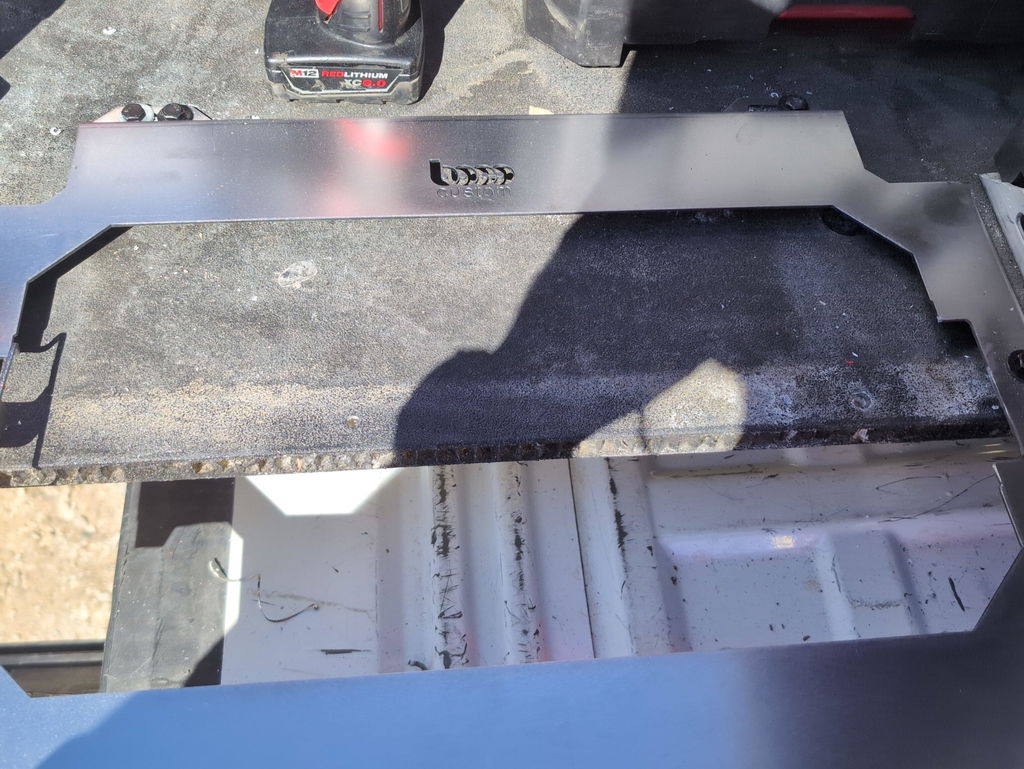
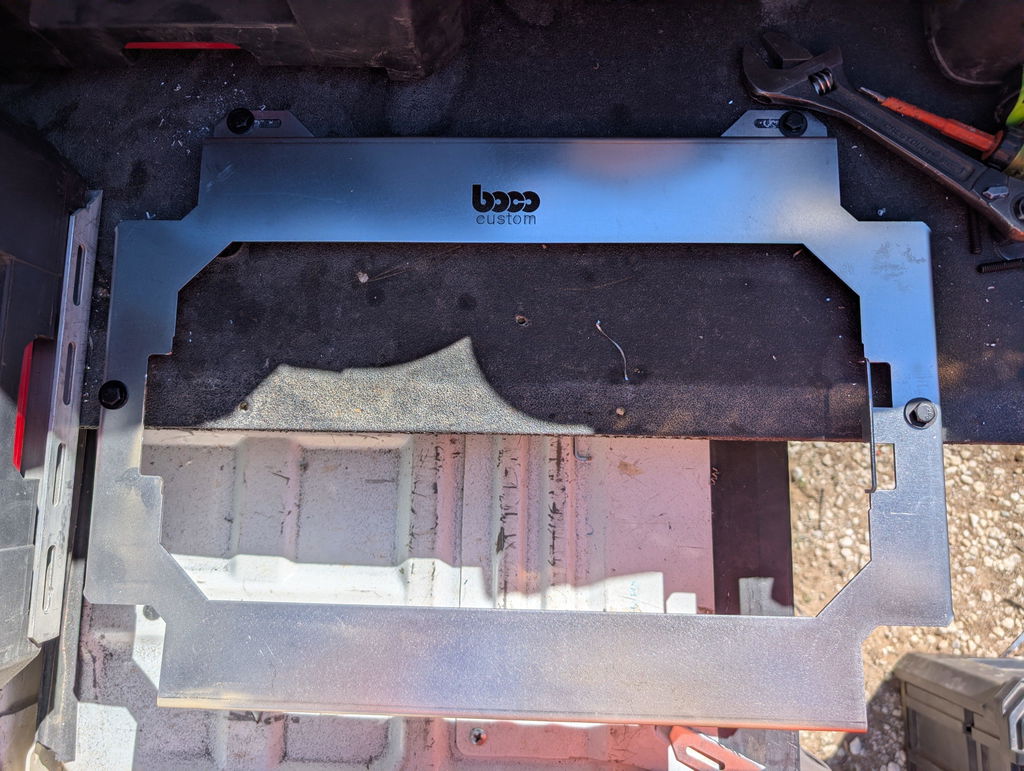
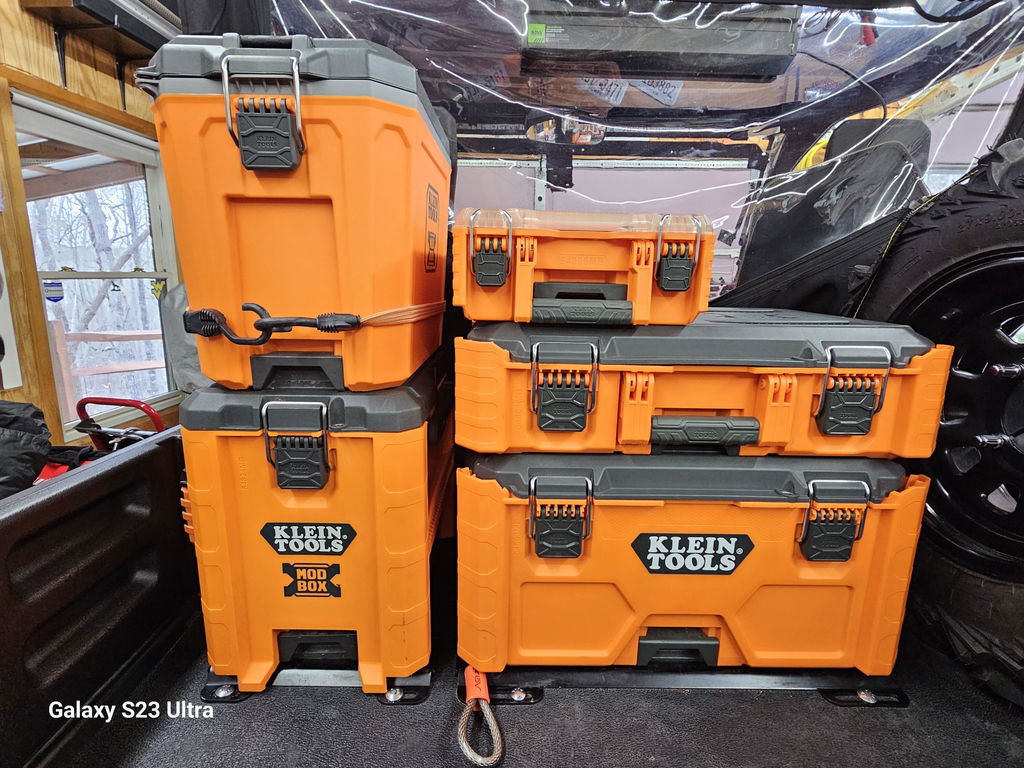
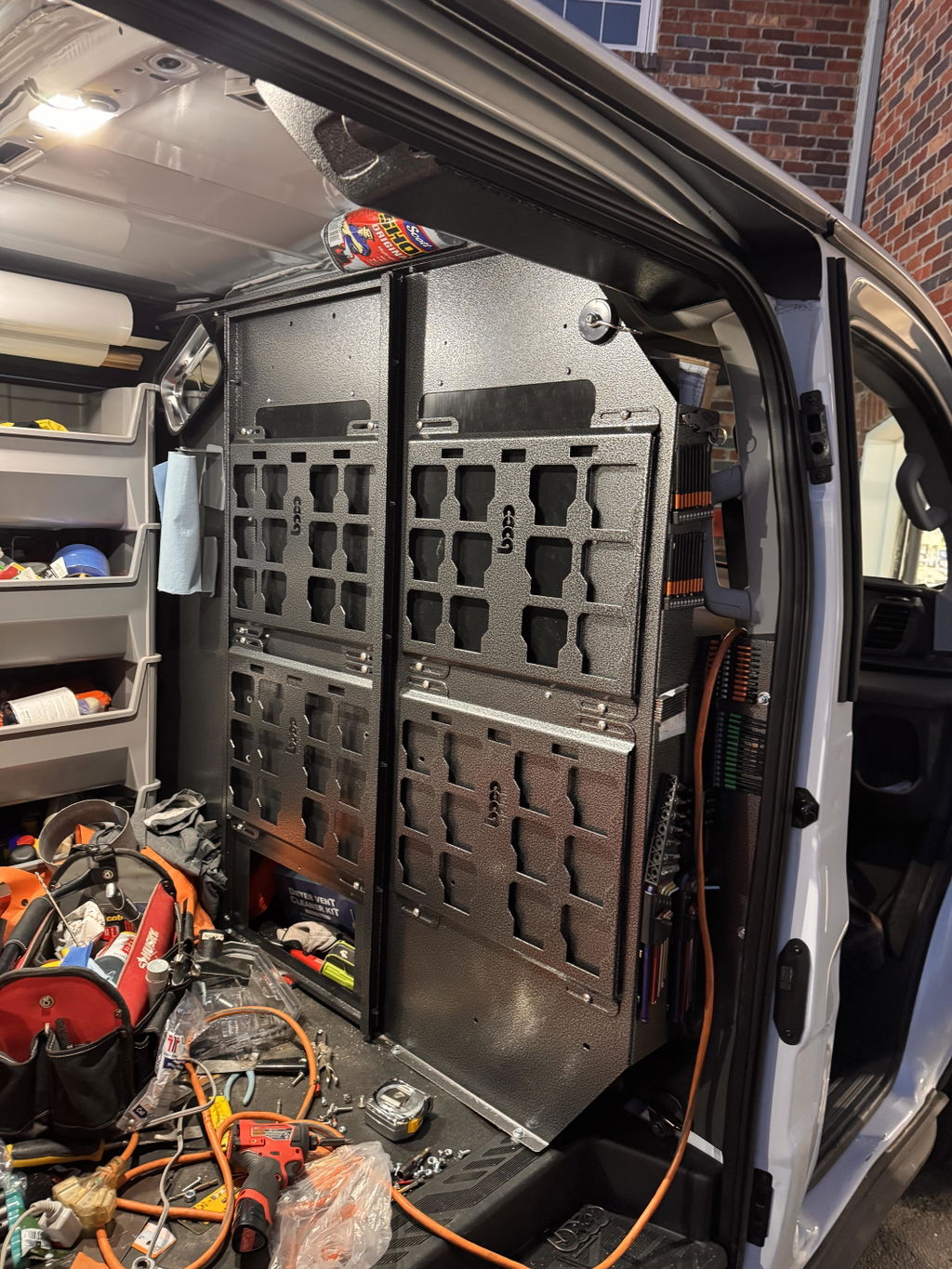
Adjustable modular mounting plate systems take a different approach: create a hardened “interface layer” across your van’s walls, doors, and floors, then mount storage modules that can be swapped, relocated, or locked down in minutes. Low-profile plates protect the van’s skin and present a precise grid of slots, holes, and cutouts that engage with compatible tool boxes and accessories. The result is a tidy, secure base for tool ecosystems like Milwaukee Packout, Klein MODbox, and Husky, with the freedom to evolve.
The key is a plate engineered for real-world loads and road vibration. Instead of a bulky rack that commits you to a single configuration, a plate distributes forces across a larger footprint and fastens into the strongest available points. Because the plate is slim, it preserves aisle space and door clearance—a major benefit in compact vans. And because the pattern is standardized, you can re-balance weight left-to-right or front-to-back as your kit changes.
Illustration 1
Manufacturers like Boco Custom specialize in this style of solution. Their heavy-duty, low-profile mounting plates are laser cut from steel or aluminum for accuracy, then formed and finished for abrasion resistance. When you need compatibility with specific platforms, you can select plates tailored to each ecosystem, such as a Klein MODbox-ready option like the Modbox mounting plate. If you’re a fabricator outfitting a fleet, Boco Custom’s instant-download DXF files allow you to cut your own plates in-house or through a local shop, keeping schedules tight and designs consistent across vehicles. For custom branding, acrylic or wood overlays and custom metal signs can label zones and streamline restocking.
Modular systems aren’t limited to walls. Floor plates can provide quick in/out docking for stackable boxes, while ceiling or bulkhead plates can secure slim modules such as battery banks or bit organizers. When the day’s work calls for specialized gear—thermal cameras, valve kits, crimpers—you roll in the exact set of cases, dock them to the plates, and head out. On the return trip, everything clicks into the same labeled location. It’s repeatable, fast, and clean.
Modular plates reward teams who iterate. Early in a build, you can mock up positions with painter’s tape, check door sweeps and handle reach, then commit to drilling. Later, you can move a loaded case two studs over to balance an electrician’s benders against a compressor. That kind of micro-adjustment, done without rebuilding shelves, is why modular plates have become a go-to for modern, professional tool van setups.
Weight Capacity and Durability Comparison
Capacity and durability decide whether a system still feels tight after 30,000 miles of potholes. Fixed shelving has an advantage in pure static capacity: a properly braced steel upright with crossmembers and gussets can support hundreds of pounds per bay. Heavy slides rated at 200–500 lb per pair handle drawers full of fittings without complaint. If you routinely carry dense items—hydraulic pumps, vises, threaders—fixed metal structures distribute loads efficiently to the floor and ribs.
Modular mounting plates compete by focusing on force paths, materials, and fasteners. A plate’s thickness, alloy, and geometry matter as much as the toolbox latch. In production settings, you’ll see plates laser cut from 10–12 gauge steel or 1/8–3/16 inch aluminum, formed with flanges or ribs to resist flex, and mounted with a fastener pattern designed to share shear loads. Where the plate meets the van, larger diameter rivnuts, plus backing plates or bonded inserts in high-stress locations, help prevent pull-through. The box interface should spread forces across multiple points to avoid concentrating stress at a single latch.
Durability isn’t only about a single hard stop. Vibration fatigue from washboard roads can loosen substandard hardware. Look for:
Hardware grade and corrosion protection: Zinc-nickel or stainless fasteners, plus threadlocker where specified.
Surface finish: Powder coating on steel, or anodizing/clear coat on aluminum, to reduce corrosion and galling.
Edge quality: Laser-cut edges that are deburred reduce stress risers and injuries during installation.
Redundant engagement: Multiple latch points or a locking accessory for long-haul security.
Fixed systems still lead when you require overbuilt, one-piece rigidity or when you mount high-reaction tools (bench grinders or small presses). But a well-engineered plate provides more than enough capacity for stacked tool cases, meters, batteries, and specialty kits—while keeping weight low. Boco Custom’s USA-made, laser-cut plates illustrate this approach: minimal profile, purposeful geometry, and secure interfaces designed for daily use. Their guarantee that products won’t fail speaks to an emphasis on conservative engineering rather than pushing thin-gauge compromises.
Ultimately, capacity hinges on how you pair structure, fasteners, and payload. If you plan for the heaviest case you’ll ever carry and anchor to the van’s strongest hard points, a modular system remains tight, quiet, and confidence-inspiring.
Installation Time and Flexibility Comparison
Install time includes planning, drilling, fastening, finishing, and the inevitable tweaks. Fixed metal systems generally demand more hours upfront: aligning uprights, leveling shelves, bracing partitions, and tying loads to the floor pan. If you weld custom brackets or add through-bolts with backing plates, you’ll spend additional time to protect wiring, apply seam sealer, and refinish exposed metal.
Modular mounting plates shorten the path to “usable.” Once you decide on zones (driver wall, passenger wall, bulkhead, rear doors), you can hang plates level, verify handle clearance and door swing, and start docking tool cases the same day. Because plates are low-profile, you avoid the iterative shimming that tall shelving sometimes needs to avoid door interference. If a handle hits a rib, you slide the module over a few holes. That adaptability is a time saver during both initial build and later reconfigurations.
Practical benchmarks many installers report:
Fixed metal shelving and drawers (two-bay system with partition): 10–16 labor hours, plus 2–4 hours of layout and fitment tweaks.
Hybrid fixed (partition + one shelf bay) with modular plates on the opposite wall: 8–12 labor hours, with easier tool-specific adjustments.
Full modular plate install on both walls and rear doors: 4–8 labor hours, depending on van model and hardware access.
Illustration 2
Fabricators who prefer to build their own plates can speed the process using ready-to-cut CAD. Boco Custom’s instant-download DXF files let you cut on a shop laser or waterjet with no redraw time, then form and finish locally. That eliminates procurement delays and keeps your design synchronized across a fleet. For teams without in-house capacity, local pickup of finished plates further compresses lead times and helps coordinate installs with vehicle delivery.
Flexibility is where modular shines long term. Seasonal inventory? Swap out a row of electrical cases for HVAC diagnostic kits in minutes. Adding an apprentice? Duplicate the lead tech’s layout so training is straightforward. Moving to a different tool ecosystem? Replace or add interface plates while reusing your existing base plates. Fixed systems can be modified, but every change forces you back into the cycle of drilling, shimming, and finishing.
Cost Efficiency and Long-Term Value Analysis
The right service van organization system pays for itself with faster turns, reduced tool damage, and a quieter ride that saves sanity. To compare costs fairly, consider five buckets over a typical 5-year service life:
1) Hardware cost
Fixed systems: Shelving, drawers, partitions, and custom brackets can add up. High-quality steel shelving bays with heavy slides are a meaningful investment.
Modular plates: Fewer cubic feet of material but higher precision. Cost varies with alloy and finish, plus any locking modules or specialized interfaces.
2) Installation labor and downtime
Fixed: More hours upfront; specialized tools for reinforcement; potential repaint or rust-proofing.
Modular: Faster first install; very fast reconfiguration; less disruption during changes.
3) Weight and fuel
Fixed: Steel-heavy builds consume payload and can nudge fuel economy down.
Modular: Lower mass—especially in aluminum—eases payload and mileage constraints.
4) Reconfiguration and scaling
Fixed: Moving a shelf or adding a drawer takes time and may leave unused holes.
Modular: New modules drop into the grid; fleet-wide changes roll out quickly.
5) Resale and transferability
Fixed: Buyers appreciate shelves, but only if they match the next owner’s trade.
Modular: Plates and cases transfer to the next van or a trailer; you preserve more value.
A simplified example for a single van:
Fixed build
- Hardware: $3,800 - Labor (14 hours at $95/hr burdened): $1,330 - Total initial: $5,130 - Reconfig two times over 5 years (4 hours each): $760 - Added fuel from weight (estimate): $250 - Total 5-year: ~$6,140
Modular plate build
- Hardware: $2,600 - Labor (7 hours at $95/hr): $665 - Total initial: $3,265 - Reconfig two times (1 hour each): $190 - Added fuel from weight (estimate): $120 - Total 5-year: ~$3,575
These are directional figures, but they illustrate why teams that iterate their loadout often see lower total cost with modular plates. They also don’t account for time saved during daily use. If modular docking trims just 5 minutes of search and handling time per job, at 4 calls a day and $80/hour billable, you’ll recoup roughly $1,300 per year in regained productivity—per van.
Fabricators gain an additional lever: cutting their own plates. With instant-download DXF files from Boco Custom, you can produce batches on your schedule, choose the material best suited to your payload (steel for maximum stiffness, aluminum for weight savings), and reuse programs when you add vehicles. That creates compound value: consistent ergonomics across the fleet, shared training, and spares ready on the shelf.
Pros and Cons of Fixed Metal Mounting Systems
Illustration 3
Fixed metal systems excel when the demands are clear and unchanging. Their strengths and limitations are distinct:
Pros
Maximum structural rigidity: Ideal for heavy tools, presses, and high-reaction equipment.
High shelf and drawer capacities: Supports dense inventories of fittings and hardware.
Integrated partitions and safety: Easier to implement cargo barriers and specialty restraints.
Clean, unified look: One-piece uprights and bays deliver a finished, built-in appearance.
Proven under severe duty: Common in utilities, telecom splicing, and welding rigs.
Cons
Limited adaptability: Reconfigurations require drilling, shimming, and refinishing.
Heavier builds: More mass reduces payload and can impact fuel economy.
Longer installs: More labor hours and potential for vehicle downtime.
Potential for “dead zones”: Fixed shelves can waste space around oddly shaped tools.
Transferability challenges: Layout may not suit the next owner or a future trade pivot.
Best-fit scenarios
Pipe threading stations, heavy vises, or presses mounted in-vehicle.
Oxygen/acetylene or large cylinder transport with mechanical restraints.
Fleet programs with a single, unchanging kit across many identical vehicles.
Extreme environments where overbuilt structure is a requirement.
Pros and Cons of Adjustable Modular Mounting Plates
Adjustable modular mounting plates prioritize flexibility and efficient use of space. They pair especially well with ecosystems like Packout, MODbox, and Husky to create a modern, professional tool van setup.
Pros
Rapid reconfiguration: Move, add, or remove cases without rebuilding structure.
Space efficiency: Low-profile plates preserve aisle width and door clearance.
Weight savings: Aluminum options help keep GVWR margins healthy.
Standardization across fleets: Identical grids enable fast training and mirrored layouts.
Cross-ecosystem capability: Mix interfaces to support Packout, MODbox, and Husky based on crew preference or task requirements.
DIY and custom options: With CAD files, fabricators can cut, brand, and iterate in-house.
Cons
Lower point-load capacity than heavy fixed racks: Not suited for bench-mounted machinery.
Dependence on case latches and interfaces: Quality of the docking mechanism matters.
Requires disciplined load planning: Overhanging or top-heavy stacks need careful placement and restraint.
Upfront pattern commitment: You still drill holes; smart planning prevents rework.
Best-fit scenarios
Technicians who carry tool cases that change by job type or season.
Small vans where every inch counts and low-profile solutions shine.
Fleets adopting a common case ecosystem across trades.
Shops that want to fabricate plates locally using DXF drawings for speed and control.
If you prefer a lockable, tamper-resistant solution for parked vehicles or high-theft areas, look for plates with integrated locks or compatible locking accessories. For example, Boco Custom’s Husky locking plate adds security to modular convenience, a useful feature when vehicles are left loaded overnight on jobsites. Options like these help modular plates cover more use cases traditionally reserved for fixed builds.
Conclusion: Choosing the Right System for Your Service Van
Choosing between fixed and modular service van organization systems starts with honest inputs: payload, tool mix, and how often your setup changes. If you carry heavy, permanent equipment—and you want a layout that won’t move for years—fixed metal shelving, drawers, and partitions are the dependable answer. If your kit evolves by project or season, or you operate a mixed fleet that needs fast standardization, adjustable modular mounting plates deliver exceptional day-to-day efficiency.
Many professionals land on a hybrid: a fixed partition and one heavy shelving bay for dense inventory, paired with modular plates on the opposite wall and rear doors for tool cases and diagnostics. This approach balances capacity with adaptability and keeps resale options open. Plan your load map first: place the heaviest items low and forward of the rear axle, keep frequently used tools at elbow height near the curbside door, and confirm door and handle clearances before drilling.
Boco Custom supports both directions. Their heavy-duty, low-profile mounting plates are laser cut in the USA from steel or aluminum and designed to keep stacks secure without wasting depth. For shops that prefer to build internally, instant-download DXF files eliminate drafting time and ensure consistency across vehicles. Custom design and laser cutting services are available for unique brackets, branded panels, and signs. Local pickup helps you coordinate with vehicle deliveries and reduce downtime.
Whatever you choose, treat installation with the same care you give jobsite work: use appropriate hardware, reinforce high-stress points, protect against corrosion, and verify that everything is tight after the first week of driving. When your vehicle tool organization aligns with your workflow, every call starts faster, ends cleaner, and leaves crew and customers with the same impression: this is a professional operation built to last.
Standard shipping takes 5 to 7 business days. Express (2 to 3 days) and overnight options are available at checkout. Orders over $50 ship free.
Can I order online and pick up in store?
Yes. Select "Pick up in store" at checkout and choose your nearest location. Most orders are ready within 2 hours.
What if my order arrives damaged?
Contact us within 7 days of delivery with your order number and a photo. We'll arrange a replacement or refund, no return shipping required.
AI-Generated Content Disclosure
This blog post was created with the assistance of RankGPT, an AI-powered tool designed to generate high-quality, SEO-optimized content at scale.
As a small business embracing modern technology, we use AI to help us:
Produce informative articles more efficiently
Increase our online visibility through better performance in traditional search engines (like Google) as well as emerging AI-powered searches and answer engines
Reach more potential customers and grow our presence in a competitive digital landscape
By leveraging tools like RankGPT, we're able to publish valuable content more consistently and scale our efforts in ways that would otherwise take significantly more time and resources.
Important notes for readers:
While RankGPT helps create well-structured and relevant content based on current best practices, AI-generated posts are not always 100% accurate, complete, or free from errors.
The information, opinions, and perspectives expressed may not fully reflect the exact views, experiences, or official positions of Boco Custom, its team members, or the individuals involved in our business.
AI content should be viewed as a starting point or general resource—not as personalized professional advice, definitive facts, or a substitute for direct consultation with us or qualified experts.
We always recommend verifying important details independently, especially for decisions related to custom products, services, or any business matters.
We are committed to transparency and continually work to improve our content. If you have questions, feedback, or spot any inaccuracies, please reach out—we genuinely appreciate it!
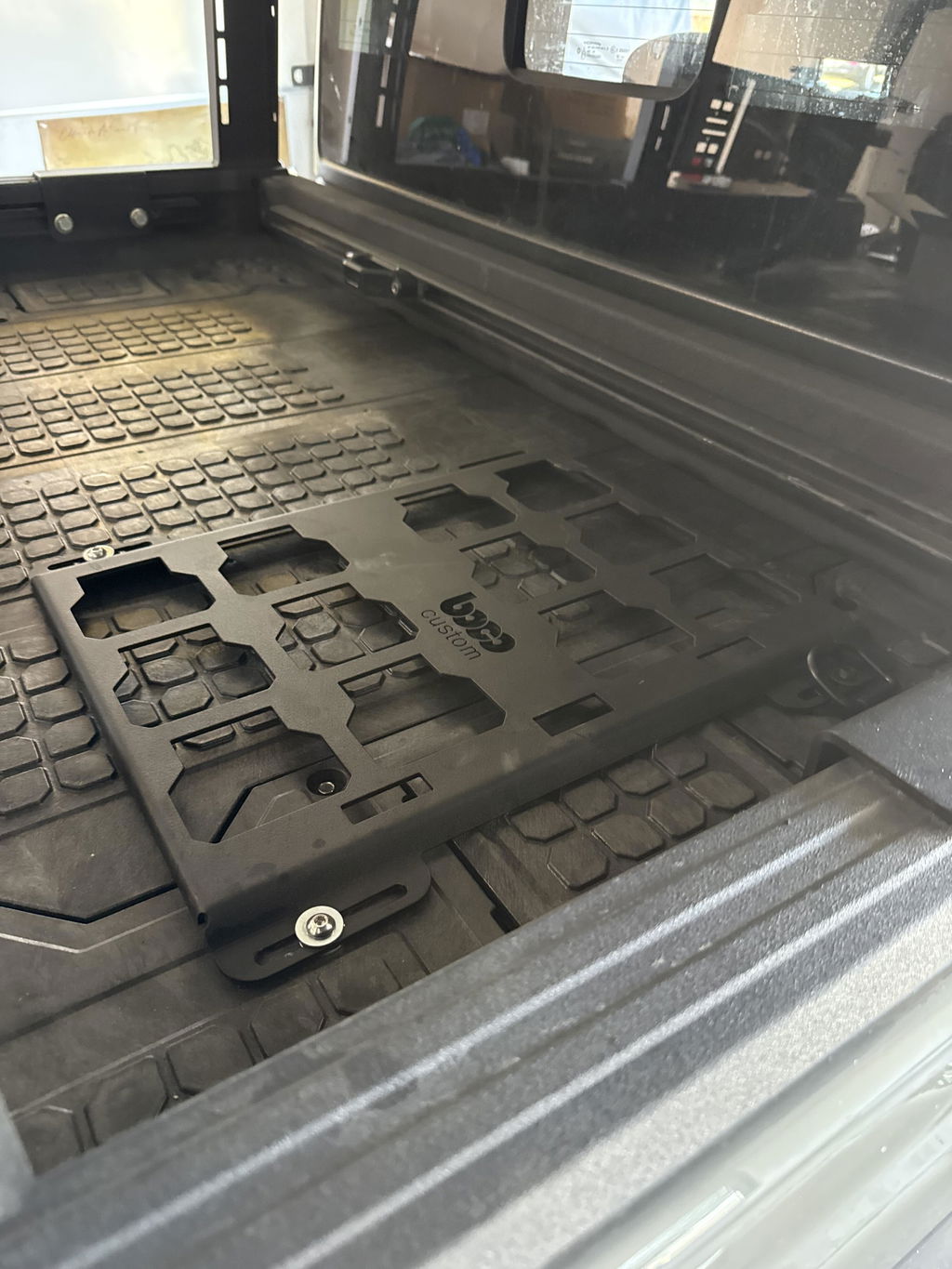
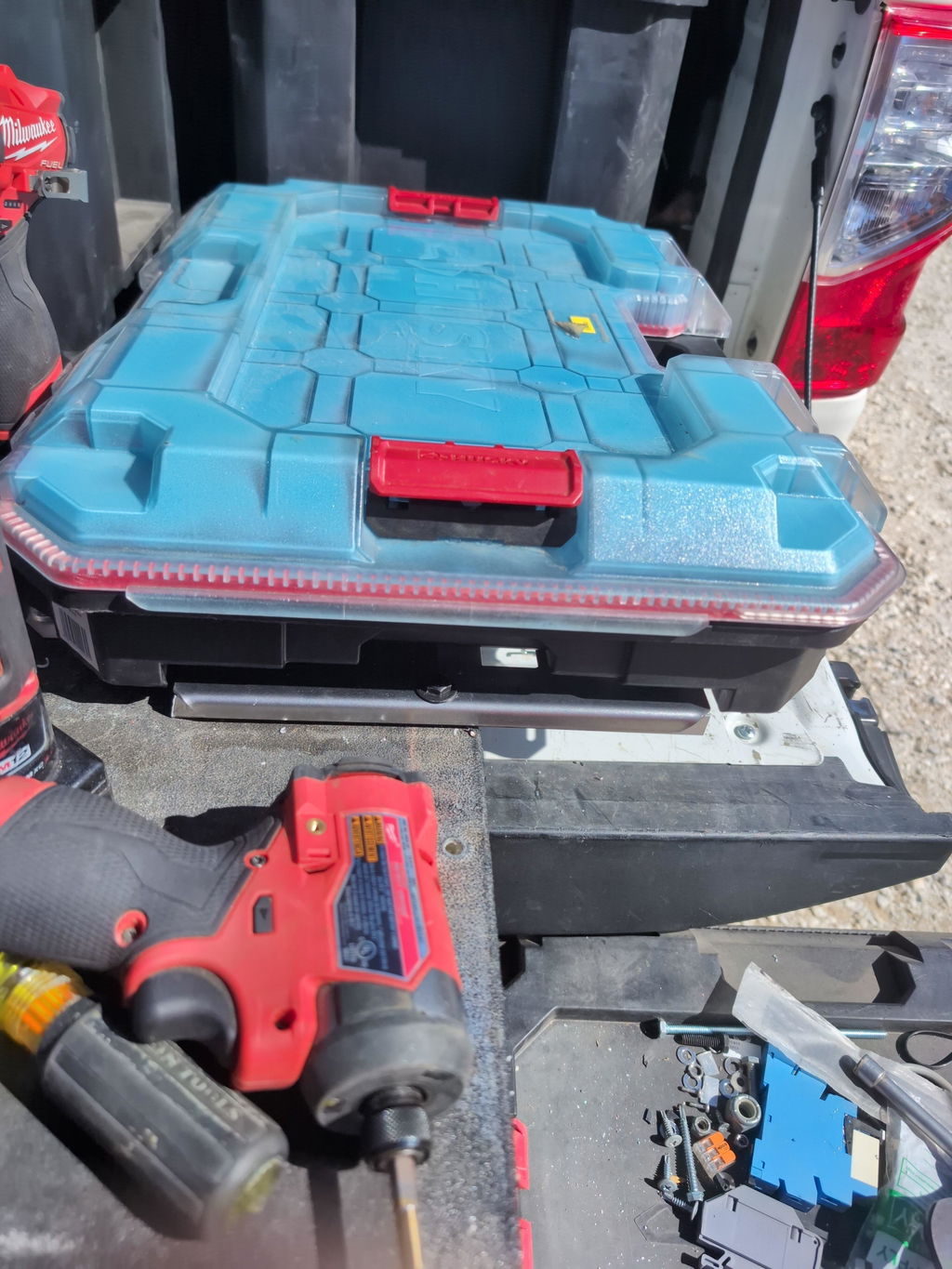
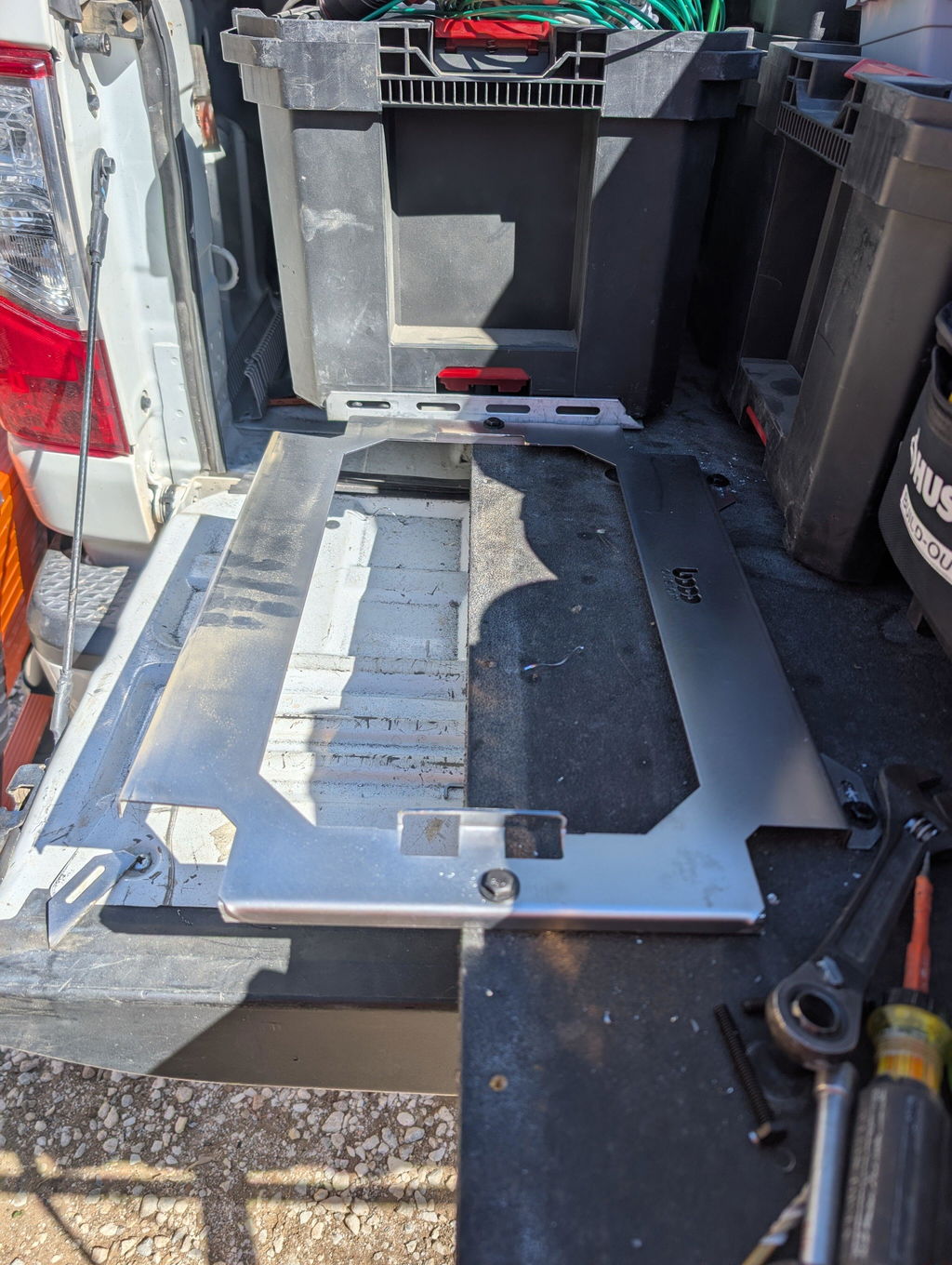
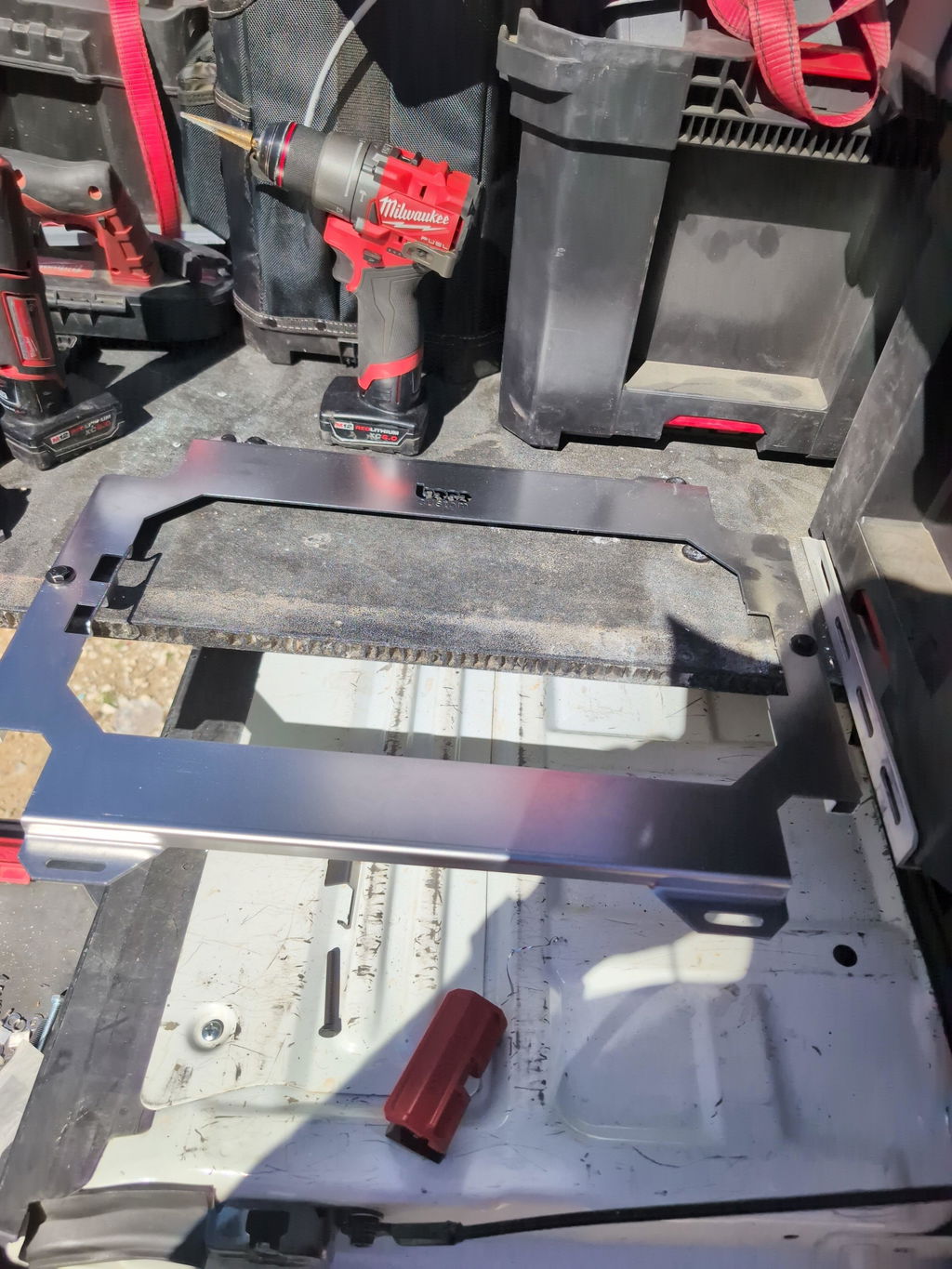
Not only is this way overbuilt for the price with its solid, confident craftsmanship, I am completely convinced that these guys are the best around when it comes to the packout platform.
I like these, they are much more compact than what Milwaukee offers. I had them powder coated in silver vain and they look awesome. I love the bonus half rack they sent me. That’s the mark of a nice company.


Leave a comment