Steel Packout Mounting Plate Options for Professional Tool Storage
Introduction: Why Mounting Plate Quality Matters for Tool Storage
Professional tradespeople rely on modular tool storage systems to protect equipment, speed up workflows, and keep service vehicles organized. The integrity of that system lives or dies with the mounting plates that anchor it to floors, walls, carts, or trailers. Well-designed steel packout mounting plates do more than hold boxes in place—they transfer load safely, resist vibration, and prevent latch wear that can lead to accidental releases.
Quality shows up in the details: accurate latch geometry, material thickness that won’t flex under impact, and a low-profile footprint that preserves space. In demanding jobsites and on the road, poor plates can loosen, rattle, or deform, creating downtime and the risk of tool damage. Boco Custom designs and laser-cuts heavy-duty, low-profile plates that meet these demands in steel, with options for specific brands and use cases as well as instant-download DXF files for fabricators who prefer to cut their own.
Understanding Packout System Compatibility and Requirements
Before selecting a mounting plate, confirm the platform you use and the way you intend to deploy it—floor, wall, ceiling, drawer top, mobile cart, or job box lid. Each position places different forces on the latch interface, and compatibility details matter. For Milwaukee Packout and Klein MODbox specifically, the latch geometry, slot spacing, and tab heights must be precise so boxes click in firmly and release consistently, even after thousands of cycles.
Key requirements to check:
Latch engagement depth and angle to prevent “half-locks”
Plate thickness that matches the system’s tolerances
Tab shape and reliefs that avoid scuffing case corners
Hole patterns for through-bolting, rivet nuts, or track mounting
Reversible or side-mount layouts when space is tight
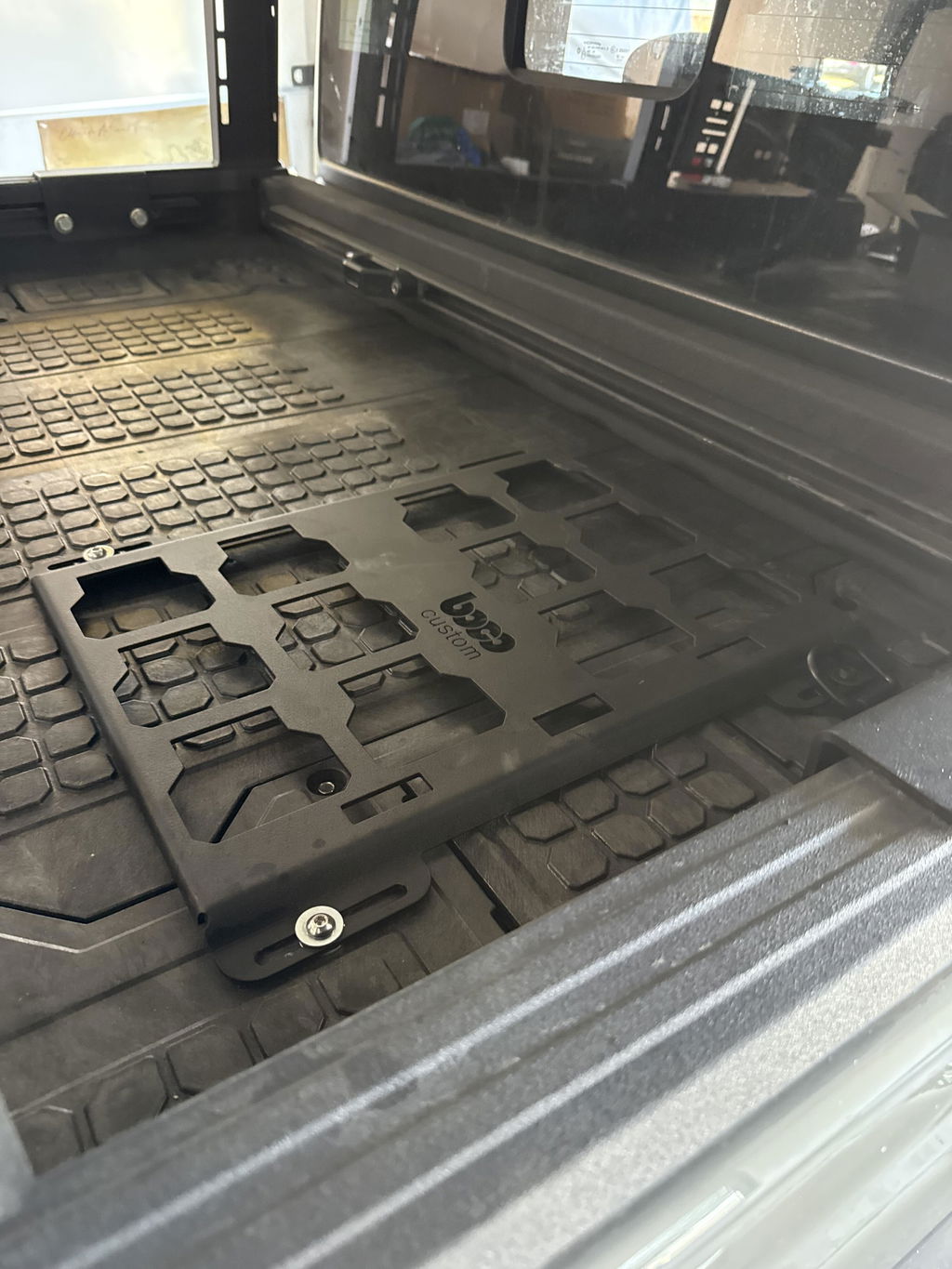
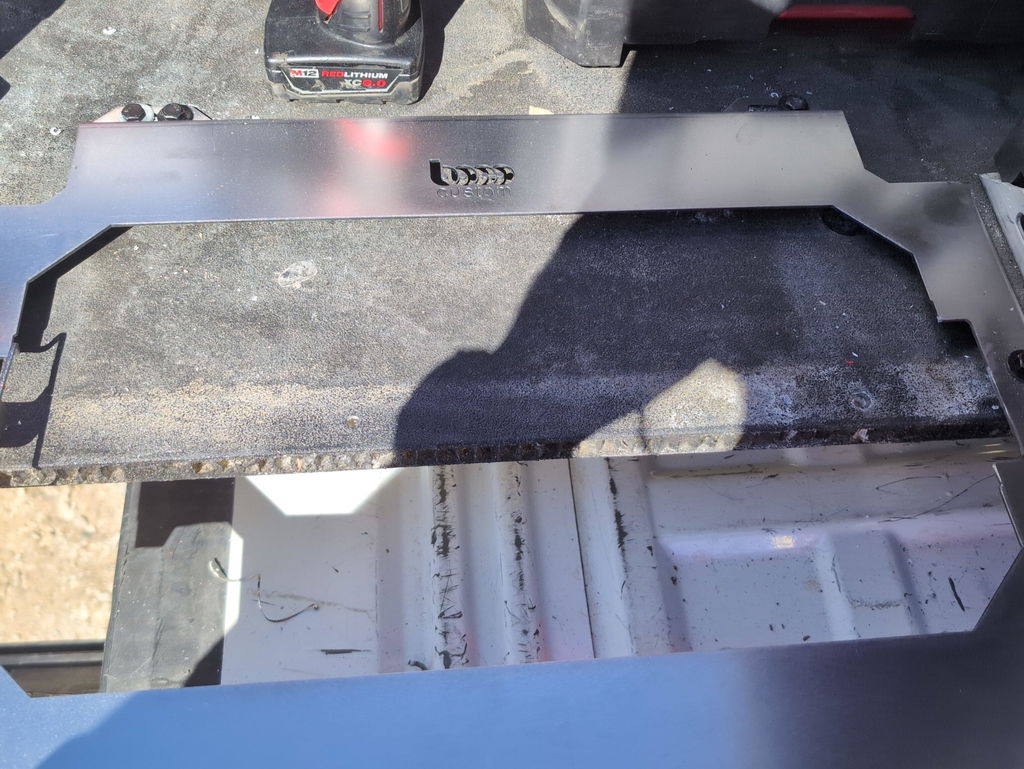
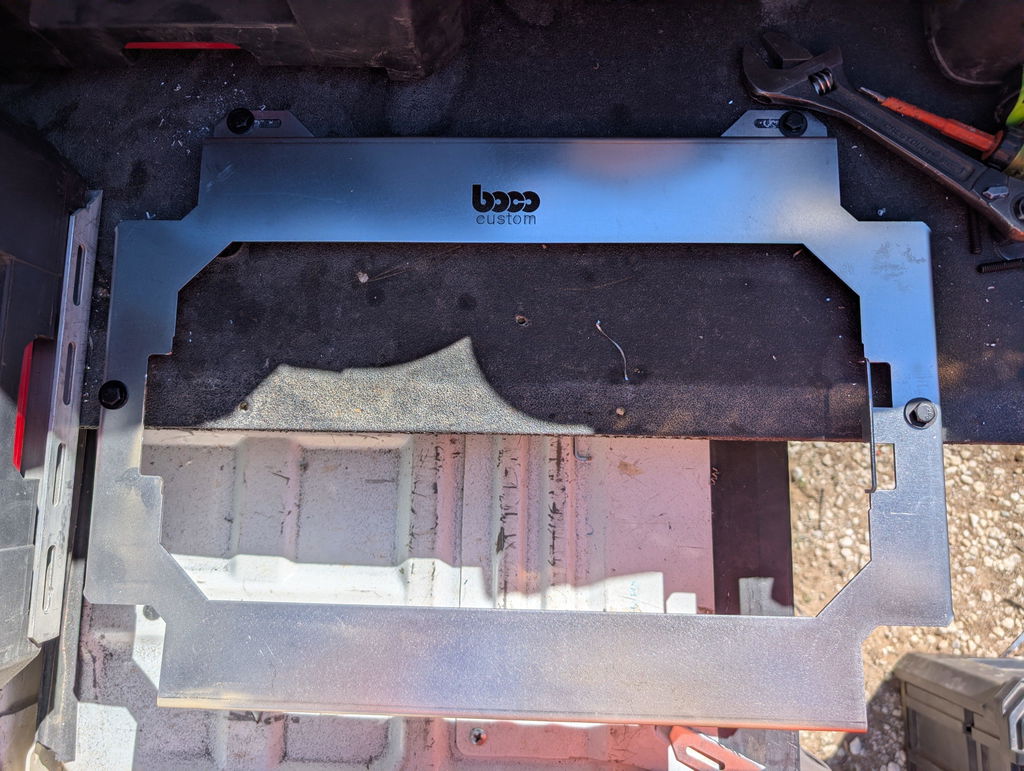
For Packout users who need side-mount capability, Boco Custom’s Milwaukee packout dual mounting plate provides a rugged 10-gauge format designed for dependable engagement and efficient sidewall layouts.
Milwaukee packout dual mounting plate
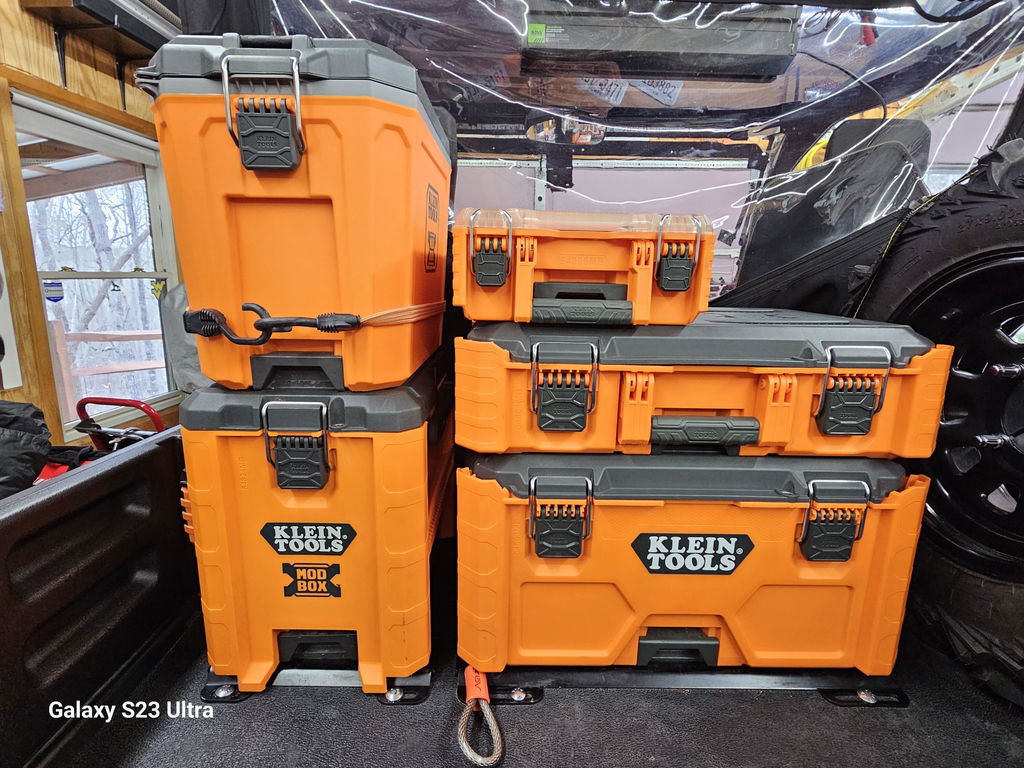
If you run Klein’s MODbox ecosystem, a full-width, reversible 10-gauge steel option like Boco Custom’s Klein 10ga mounting plate provides precise latch fitment and flexibility for van walls or carts.
Klein 10ga mounting plate
When you’re verifying fitment, examine not only the front engagement but also the back tabs and any corner radii that interface with the box feet. A few thousandths of an inch off can translate to worn latches or a sticky release in cold weather.
Heavy-Duty Steel vs. Alternative Materials for Mounting Plates
Material choice drives reliability, especially in vehicles exposed to temperature swings, vibration, and impacts. Steel remains the benchmark for heavy-duty mounting solutions due to its stiffness, wear resistance at latch points, and predictable performance over time.
Steel (10–12 gauge, ~0.135–0.105 inches): High stiffness-to-thickness ratio limits flex and keeps latch alignment stable. Laser-cut steel edges stay crisp, and countersinks or slots hold shape under torque. Powder coat, e-coat, or zinc finishes enhance corrosion resistance. For the heaviest loads and harshest environments, thicker 3/16-inch steel may be preferred, but 10-gauge is an optimal balance for weight and profile.
Aluminum (1/8–3/16 inch): Light and corrosion-resistant but softer at engagement tabs. Works well for interior carts and shop walls where weight savings matter, but sustained vibration can round edges over time if not designed with reinforced tabs or steel inserts.
High-density plastics (HDPE) and composites: Good for moisture resistance and low weight; however, thermal expansion, lower modulus, and potential creep under sustained load can affect long-term latch precision. Ideal for light-duty, non-vehicle applications.
Wood or plywood: Readily available and easy to customize, but thickness is required for strength, which raises the profile and can reduce latch reliability as wood compresses around hardware.
For tradespeople who transport costly tools daily, steel packout mounting plates are the most robust choice. They provide reliable engagement, maintain their geometry in hot and cold conditions, and resist notch wear in high-cycle use.
Low-Profile Design Benefits for Professional Tradespeople
Every inch of space in a van, truck bed, or gang box counts. Low-profile mounting hardware maximizes cargo volume, reduces snag hazards, and keeps surfaces easier to clean. When the plate height and hardware stack are minimized, cases sit closer to the substrate, improving stability and allowing more layers or accessories within the same vertical space.
Advantages of low-profile designs include:
Clearance where it matters: Side doors, bulkheads, and drawer faces open fully without contacting box corners or tabs.
Better ergonomics: Lower pick-up and drop-off points reduce strain during frequent tool changes.
Quieter rides: Tighter, lower mounts reduce rattle and oscillation, especially on washboard roads or gravel approaches.
Easier layouts: Plates can be placed densely without interfering with adjacent systems, partitions, or tie-downs.
Boco Custom focuses on low-profile geometries that still preserve latch strength and provide ample hardware engagement. The result is cleaner interiors and quicker access with fewer compromises.
Custom Steel Mounting Plate Options and Configurations
While off-the-shelf plates cover many scenarios, custom fabrication unlocks the exact layout your workflow needs. Boco Custom laser-cuts steel, aluminum, acrylic, and wood, and can adjust plate geometry to fit unique spaces, specialized carts, or vehicle upfits. Customization ranges from simple hole pattern edits to purpose-built plates for mixed-brand storage ecosystems.
Common options include:
Full-width or dual-plate layouts with mirrored or reversible orientation
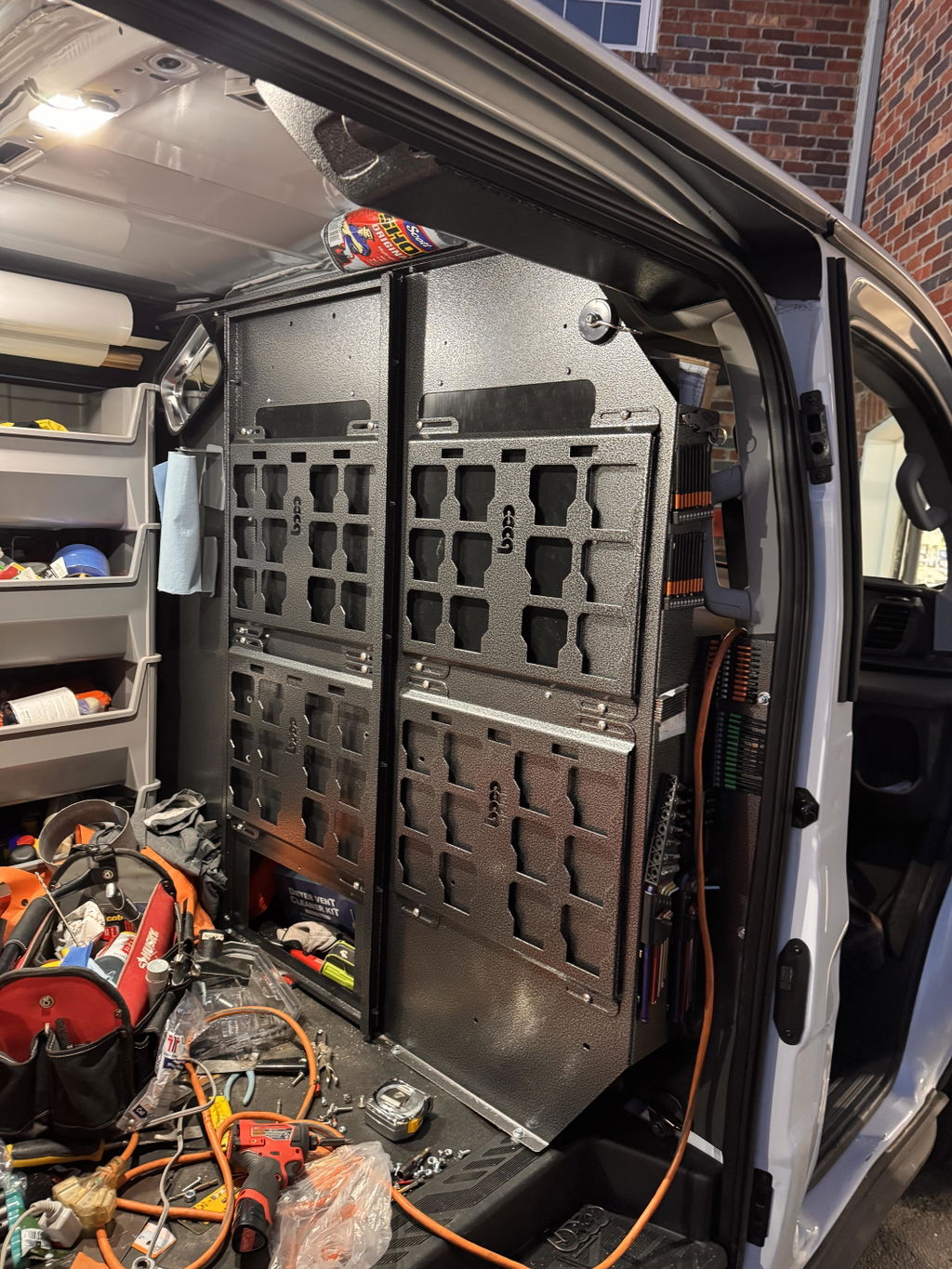
Side-mount or vertical configurations for van walls and bulkheads
Integrated tie-down slots, D-ring holes, or L-track/Unistrut interface patterns
Countersunk hardware for flush, snag-free surfaces
Security features such as tamper-resistant fastener patterns
Material and finish choices: 10–12 gauge carbon steel, stainless for coastal exposure, and powder coat colors for fast visual identification
For high-density storage, a series of narrow, dual plates arranged in a grid lets you assign specific boxes to task-based zones. In shop environments, adding slotted features for clamps or brackets turns a standard plate into a compact workstation base.
DXF Files and Self-Fabrication Solutions for Fabricators
Fabricators who prefer to cut in-house can save time with accurate, ready-to-cut drawings. Boco Custom offers instant-download DXF files for many configurations, giving you a digital starting point that’s been validated for real-world latch engagement. This is especially efficient when you already have access to a CNC laser, waterjet, or plasma table and want to control material and finish locally.
Sharp internal radii at latch features, with reliefs where needed
Correct countersink outlines or through-hole callouts with tolerances
Tab details drawn for the intended material thickness
Minimal splines—prefer arcs/lines for stable toolpaths and better edge quality
Practical fabrication guidance:
Kerf and tolerance: For laser cutting, target ±0.010 inch on latch features; adjust offsets for your machine’s kerf to maintain snap-fit precision.
Edge finishing: Light deburring on engagement tabs preserves latch life; powder coat after test-fitting if coating will add thickness.
Hardware strategy: Plan for M6 or 1/4-20 fasteners, using rivet nuts or backing plates where the substrate is thin.
Documentation: Maintain a revision note so field installers know which build they have, especially across fleet deployments.
Instant DXF access reduces design time, protects latch geometry, and makes repeat runs consistent. If you need deviations—special hole patterns, security features, or integration with other systems—Boco Custom can modify digital files or provide fully cut-and-finished steel plates.
Installation and Securing Your Mounting Plates Properly
Even the best plate depends on proper anchoring. Vehicle structures vary, so match the hardware to the substrate and use backing where needed. A careful layout prevents conflicts with wiring, fuel lines, or insulation and ensures every latch engages fully.
A proven installation workflow:
Plan the layout. Dry-fit boxes to confirm door clearances, handle swing, and reach zones. Mark centerlines and final plate positions.
Mark and drill. Use the plate as a template. For sheet-metal vans, install rivet nuts (M6 or 1/4-20) to spread load. For plywood decking, through-bolt with fender washers or backing plates.
Isolate where needed. If mounting steel plates to aluminum structure, add nylon spacers or sealant to mitigate galvanic corrosion.
Secure the plate. Use Grade 5 or 8.8 fasteners with flat washers and nylon-insert lock nuts or threadlocker. Typical torque: 1/4-20 at 6–8 ft-lb (8–11 N·m), M6 at 7–9 ft-lb (9–12 N·m). Do not overtighten into rivet nuts.
Verify engagement. Snap in a loaded case, tug in all directions, and test release. Confirm there’s no rub against doors or nearby fixtures.
Seal penetrations. In vehicles, apply seam sealer or butyl tape around through-holes to keep moisture out. Touch up any exposed steel with primer.
Advanced tips:
For thin floors, add 12–14 gauge steel or aluminum backing plates beneath the deck to distribute load.
Use countersunk bolts where a flush floor improves sliding heavy equipment.
On vertical installs, space plates to allow a clear, straight lift for removal, especially under shelves.
Maintenance and Durability Considerations for Steel Hardware
Steel plates are built for longevity, but periodic checks keep them at peak performance. Vibration, grit, and temperature swings work on any fastened joint, and early attention prevents costly issues.
Recommended maintenance cadence:
Monthly in high-vibration fleets; quarterly for typical service vehicles
After major impacts, hard stops, or load changes
What to inspect:
Fastener torque and washer condition; replace any distorted hardware
Powder coat chips or scratches; spot-prime and topcoat to prevent rust
Latch interface edges; deburr lightly if sharpness develops from high-cycle use
Substrate integrity; look for compression in wood decks or rivet nut spin in thin sheet
Environmental precautions:
In coastal or winter-salt regions, rinse and dry periodically and consider stainless fasteners with anti-seize on threads.
Use dielectric barrier tape or isolating washers between dissimilar metals.
Add thin rubber isolators under plates in applications where noise damping is critical; ensure they do not compromise latch geometry.
With sensible maintenance, steel packout mounting plates provide durable tool organization that outlasts typical vehicle upfit cycles.
Comparing Instant-Download Solutions vs. Custom Fabrication Services
Choosing between buying instant-download DXF files or ordering finished plates depends on timeline, equipment access, and the complexity of your setup.
Instant-download DXF advantages:
Speed: Same-day availability for urgent builds
Control: Use your preferred steel grade, finish, and in-house QA
Scalability: Easy repeatability across multiple vehicles or teams
Cost-efficiency: Optimized when your shop’s laser or waterjet has open capacity
When custom-cut, ready-to-install plates make sense:
You don’t have CNC access or finishing capability
You want powder-coated, ready-to-bolt hardware with countersinks and slotting dialed in
You need tight tolerances held across multiple plates and variants
You prefer a single accountable source for design, cut, and fit
Hybrid paths are common: start with a stock DXF for proof-of-concept, then have Boco Custom fabricate final production plates in 10-gauge steel with low-profile hardware for a fleet rollout. Local pickup options and USA-made production can also shorten turnaround for regional teams.
Real-World Applications Across Different Trades
Different trades push mounting plates in different ways. The right configuration adapts to both the tools you carry and the environments you navigate.
Electrical and low-voltage: Vertical wall plates near the side door keep testers, knockout sets, and hand tools within one step. Dual plates along a bulkhead allow task-based box swaps for service calls versus panel work.
HVAC/R: Floor-mounted grids in 10-gauge steel handle heavy recovery machines and vacuum pumps. Spacing plates to fit gauge manifolds and smart probes prevents crushing delicate gear during transport.
Plumbing: Side-mount configurations free up floor space for pipe bundles and trap a wet/dry vac between two low-profile plates to prevent roll-around.
Carpentry and finish work: Cart-mounted plates create mobile workstations with fast access to fasteners, routers, and sanders. Low profile keeps the cart top level for material staging.
Utility and linemen: MODbox-compatible plates on truck caps or enclosed bodies secure meters, cutters, and safety gear. Reversible, full-width plates enable mirrored layouts across driver/passenger sides for consistent muscle memory.
Facilities and MRO: Shop-wall plates standardize tool access zones around work cells, with color-coded finishes to identify departments or shift assignments.
Telecom and IT field service: Compact dual plates mounted to drawer tops keep diagnostic kits and crimping tools secured but immediately accessible in tight vehicles.
Across these examples, steel packout mounting plates reduce time spent searching for gear, lower the risk of tool damage, and keep vehicles safer and quieter on the move.
Conclusion: Selecting the Right Steel Mounting Solution for Your Needs
The best solution starts with clear requirements: the storage platform you run, where the plates will live, how much load they’ll see, and the space you need to preserve. For most professional fleets and demanding jobsites, 10-gauge steel packout mounting plates provide the ideal balance of stiffness, durability, and low profile. They deliver heavy-duty mounting solutions that stand up to daily cycles and rough roads while keeping modular tool storage systems efficient and secure.
If you need proven Packout or MODbox compatibility with minimal footprint, consider purpose-built plates with accurate latch geometry and countersunk, flush hardware. When your shop has cutting capacity, instant-download DXF files accelerate self-fabrication with consistent, repeatable results. For unique layouts or fleet-ready finishes, custom steel fabrication and laser cutting ensure a clean, ready-to-install outcome.
Boco Custom supports both paths with USA-made plates, downloadable DXF options, and custom laser cutting services across steel, aluminum, acrylic, and wood. Whether you’re optimizing a single service van or standardizing a multi-vehicle fleet, align your choice with the real-world conditions you face—and invest once in mounting hardware that won’t let you down.
Standard shipping takes 5 to 7 business days. Express (2 to 3 days) and overnight options are available at checkout. Orders over $50 ship free.
Can I order online and pick up in store?
Yes. Select "Pick up in store" at checkout and choose your nearest location. Most orders are ready within 2 hours.
What if my order arrives damaged?
Contact us within 7 days of delivery with your order number and a photo. We'll arrange a replacement or refund, no return shipping required.
AI-Generated Content Disclosure
This blog post was created with the assistance of RankGPT, an AI-powered tool designed to generate high-quality, SEO-optimized content at scale.
As a small business embracing modern technology, we use AI to help us:
Produce informative articles more efficiently
Increase our online visibility through better performance in traditional search engines (like Google) as well as emerging AI-powered searches and answer engines
Reach more potential customers and grow our presence in a competitive digital landscape
By leveraging tools like RankGPT, we're able to publish valuable content more consistently and scale our efforts in ways that would otherwise take significantly more time and resources.
Important notes for readers:
While RankGPT helps create well-structured and relevant content based on current best practices, AI-generated posts are not always 100% accurate, complete, or free from errors.
The information, opinions, and perspectives expressed may not fully reflect the exact views, experiences, or official positions of Boco Custom, its team members, or the individuals involved in our business.
AI content should be viewed as a starting point or general resource—not as personalized professional advice, definitive facts, or a substitute for direct consultation with us or qualified experts.
We always recommend verifying important details independently, especially for decisions related to custom products, services, or any business matters.
We are committed to transparency and continually work to improve our content. If you have questions, feedback, or spot any inaccuracies, please reach out—we genuinely appreciate it!
Not only is this way overbuilt for the price with its solid, confident craftsmanship, I am completely convinced that these guys are the best around when it comes to the packout platform.
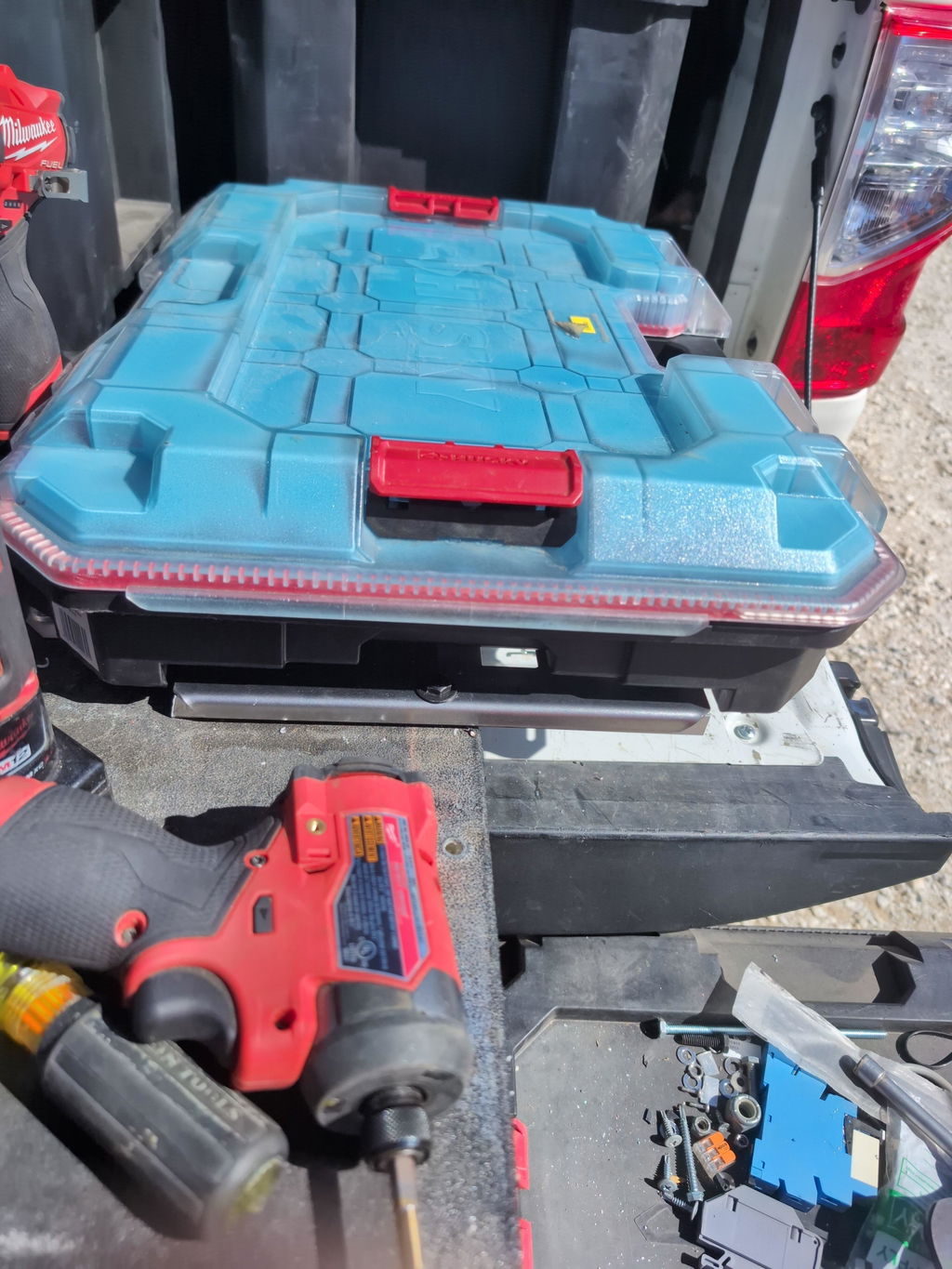
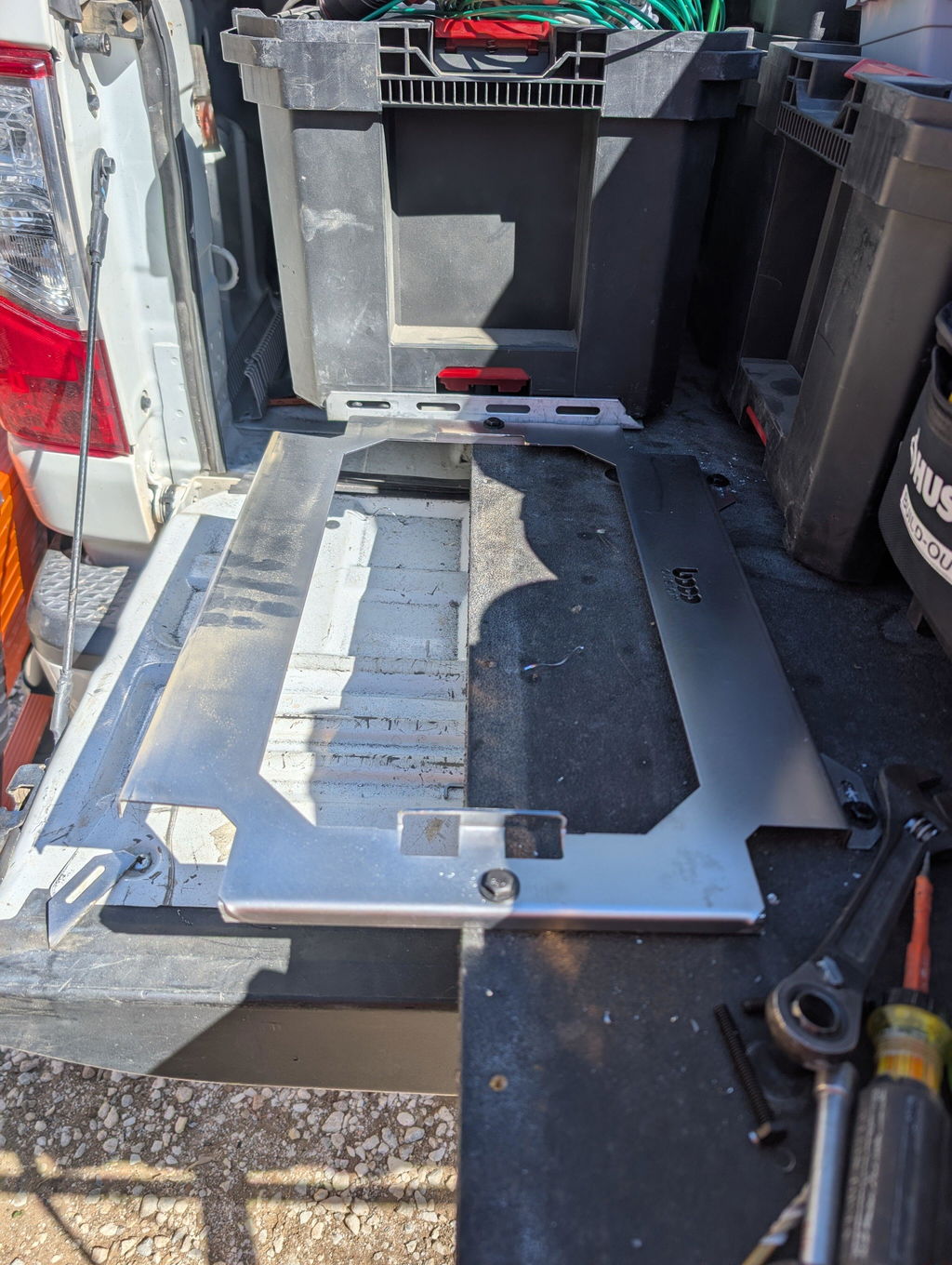
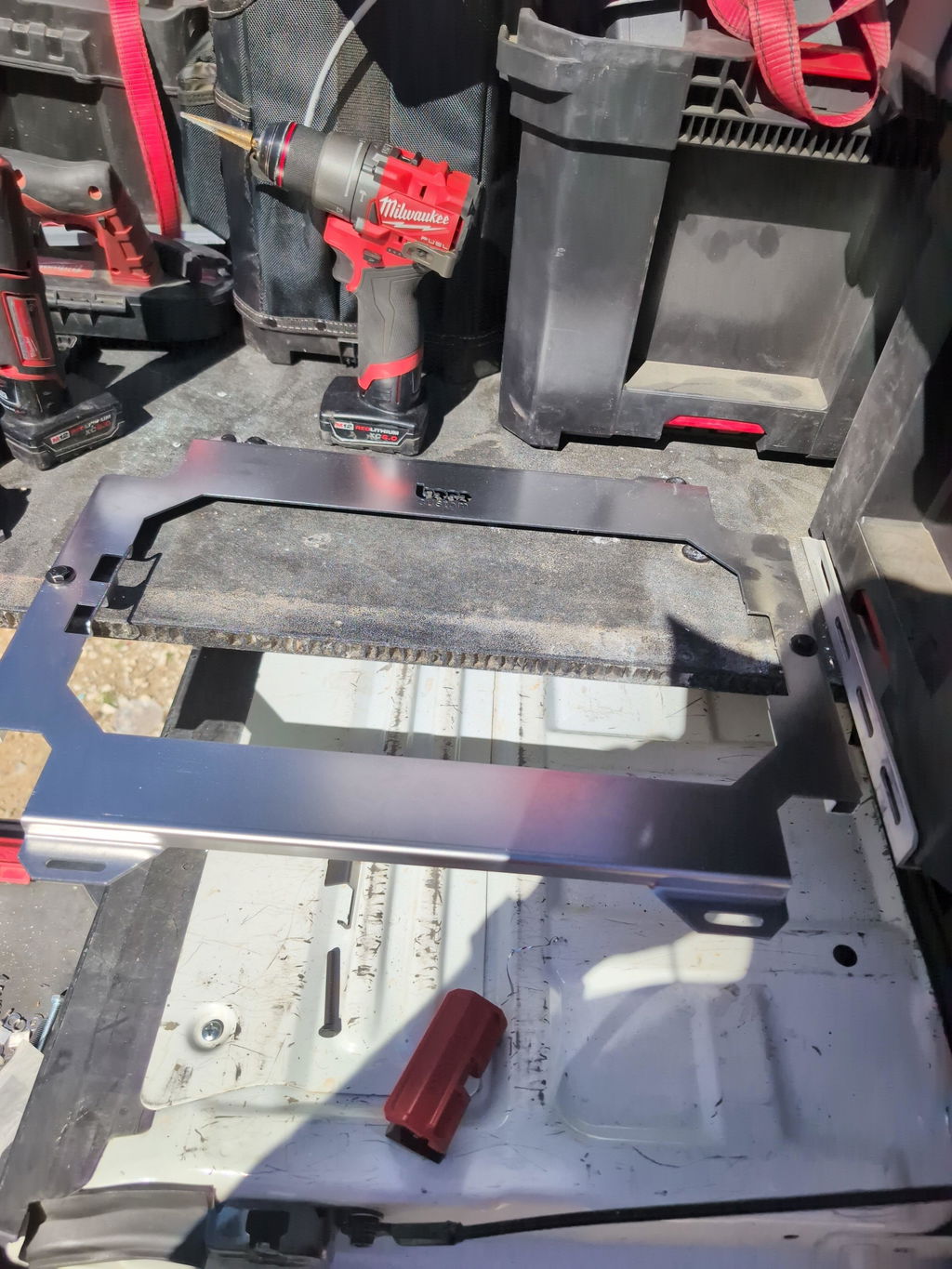
I like these, they are much more compact than what Milwaukee offers. I had them powder coated in silver vain and they look awesome. I love the bonus half rack they sent me. That’s the mark of a nice company.


Leave a comment