Custom DXF Files vs Pre-Made Off-Road Vehicle Storage Solutions
Introduction to Off-Road Vehicle Storage Solutions
Custom DXF Files vs Pre-Made Off-Road Vehicle Storage Solutions
Professional tradespeople who work beyond paved roads face a familiar set of challenges: rough terrain, variable weather, and tight timelines. In those conditions, tool storage systems do more than hold gear—they protect critical equipment, streamline workflow, and enable safe, efficient transport. Whether you’re running a service truck, van, UTV, or overland rig, the right storage layout reduces downtime, prevents damage, and keeps inventory where it belongs when the road gets corrugated.
Today’s off-road tool organization systems generally follow two paths. One is a modular, pre-made approach built around widely adopted tool ecosystems—think Milwaukee Packout, Klein MODbox, Husky, and DeWalt. The other is a custom route powered by CAD and fabrication, where you start with digital design files, cut your own parts, and tune every detail to your vehicle and work. Each path can deliver durable, low-profile mounting and professional tool organization. The best option depends on your budget, capabilities, and how specific your use case is.
Boco Custom operates at the intersection of these two worlds. The company manufactures heavy-duty, low-profile mounting plates designed to tie popular modular storage systems directly to vehicles. It also provides instant-download DXF files for fabricators who want to build custom solutions from steel, aluminum, acrylic, or wood. This article offers a practical vehicle storage comparison of custom DXF vehicle storage versus pre-made systems, with a focus on longevity, total cost, and field performance.
Overview of Custom DXF File Approach
The custom DXF file approach starts at the computer and ends on your rig. A DXF (Drawing Exchange Format) file is a 2D CAD blueprint that can be opened by most design and nesting programs and sent to a laser, waterjet, or CNC router for cutting. With the file in hand, a fabricator can produce parts accurately and repeatedly, introduce their own modifications, and build a system that matches a vehicle’s contours, anchor points, and load requirements.
For many professionals, custom DXF vehicle storage is compelling because it blends speed with control. Instant-download files eliminate the blank-page problem—you begin with a proven geometry and then adjust hole patterns, edge clearances, or mounting offsets to fit your exact layout. For example, Boco Custom offers a ready-to-use DXF bundle packout geared toward common modular systems. Those files can be laser cut in steel or aluminum, deburred, finished, and installed within days, not weeks, depending on shop capacity.
From a fabrication standpoint, the path is straightforward:
Validate file dimensions against actual components and the vehicle floor or bulkhead.
Choose material type and thickness based on target weight and duty cycle (e.g., 11–14-gauge steel for heavy use; 1/8–3/16-inch aluminum where weight matters).
Nest parts to minimize scrap, then cut via laser or CNC.
Add any bends, standoffs, nutserts, or gussets; deburr and finish (powder coat, anodize, or paint).
Test fit, install with appropriate hardware, and torque to spec.
Because the design file is yours, iteration is easy. If you later add drawer slides, onboard air, or recovery gear, you can update the CAD, recut a plate, or add a bracket. For shops managing multiple vehicles, standardizing around editable files supports consistent builds, reduces variance, and accelerates future upgrades.
Overview of Pre-Made Storage Systems
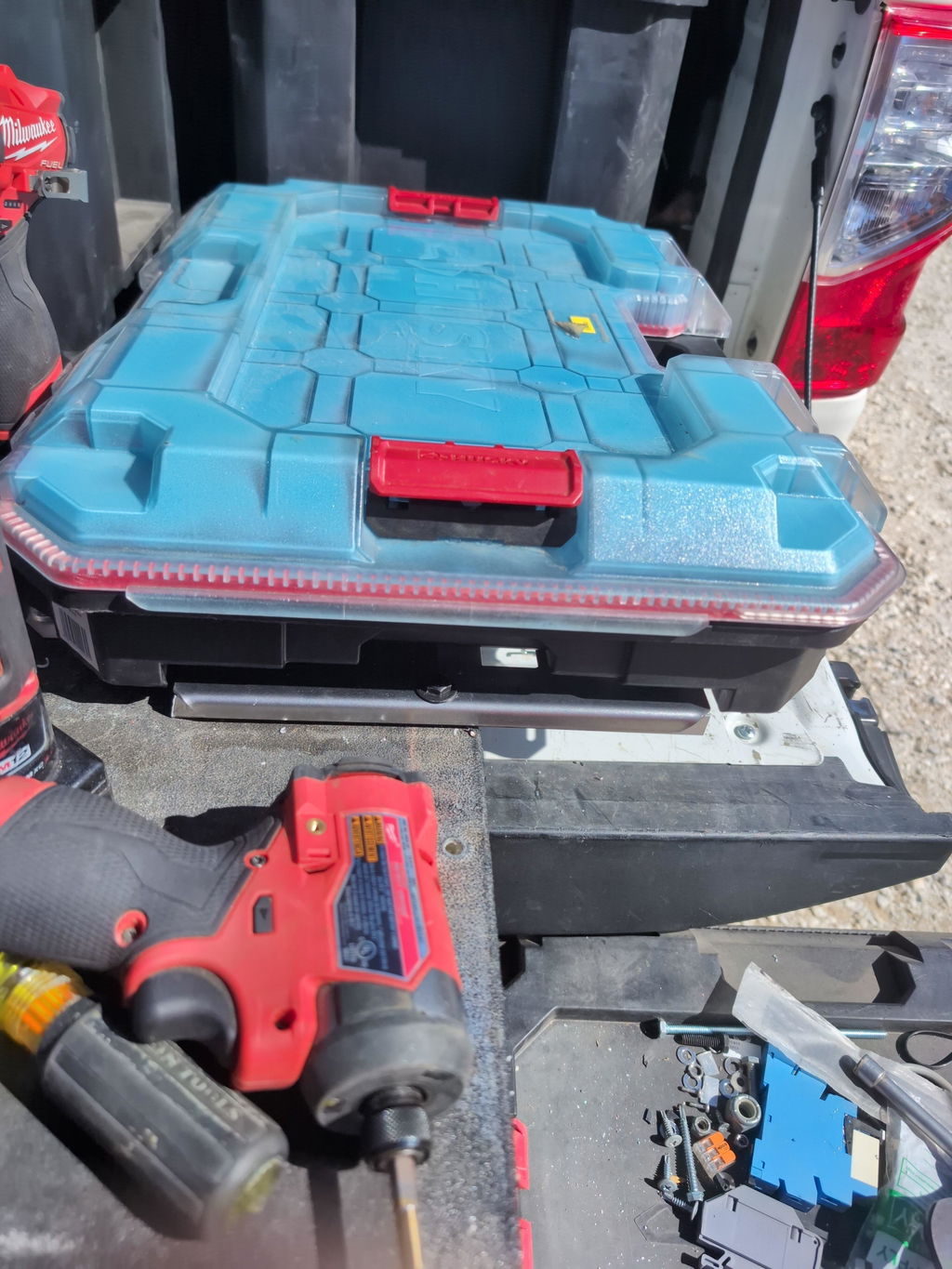
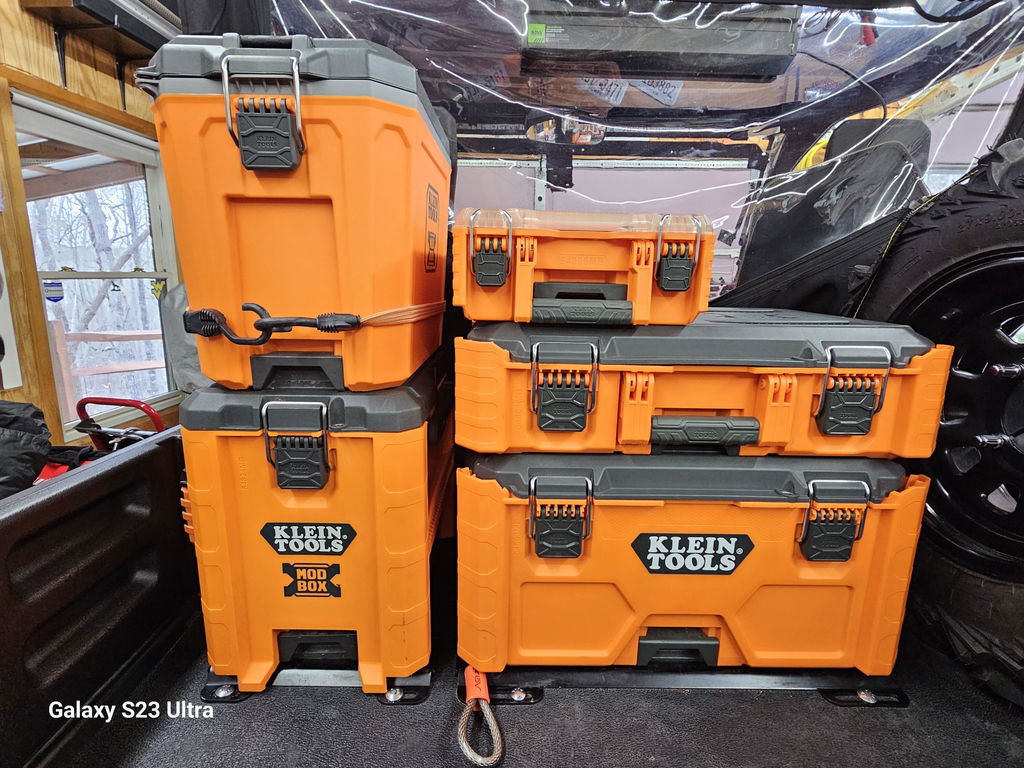
Pre-made off-road storage solutions revolve around modularity. Ecosystems like Packout and MODbox provide bins, drawers, and cases that lock together and mount to plates or rails. When paired with a low-profile mounting plate, those systems become secure, integrated storage that can withstand washboard roads and daily abuse. Many tradespeople prefer this route because it’s predictable, quick to deploy, and supported by a deep catalog of accessories.
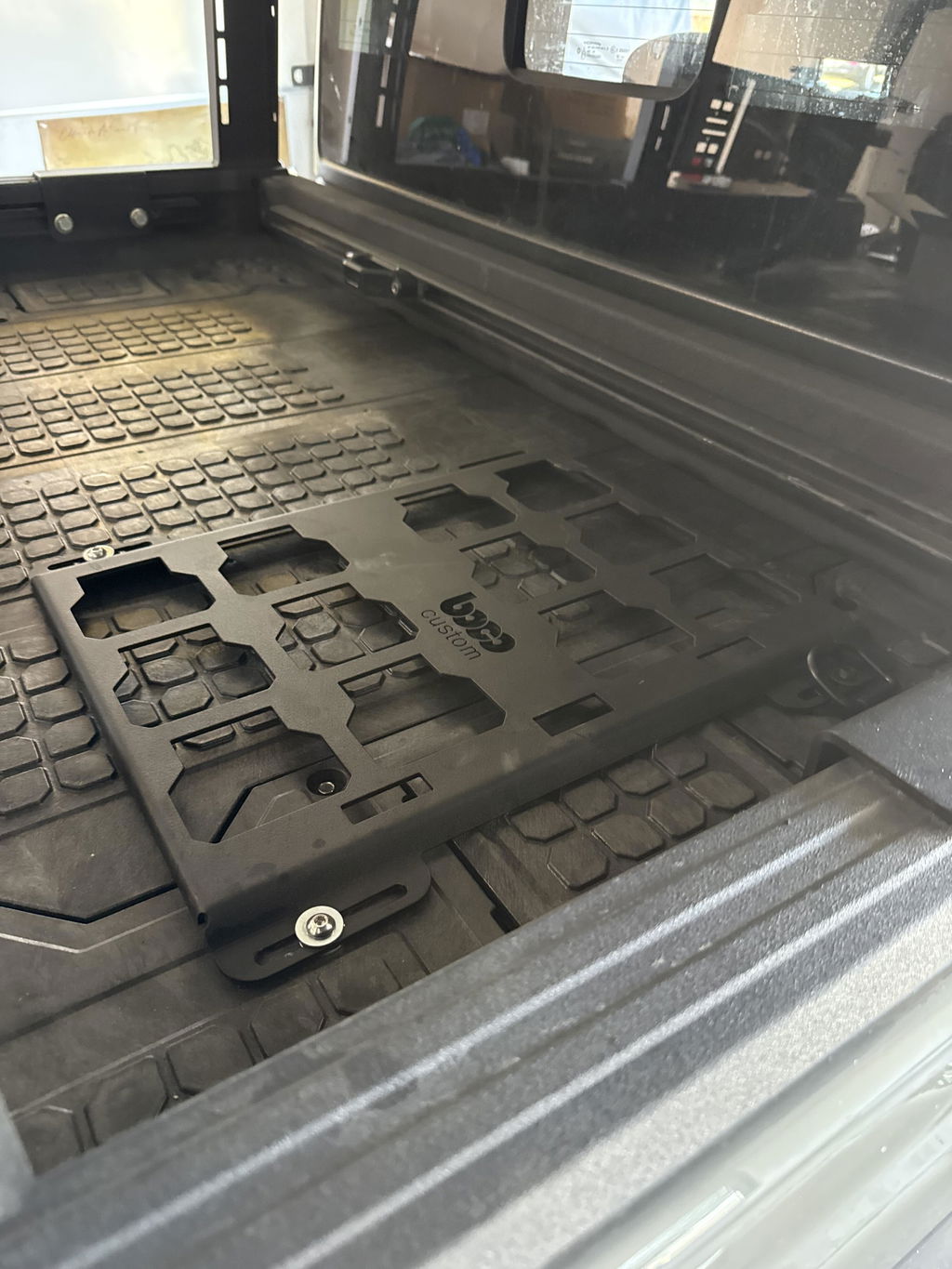
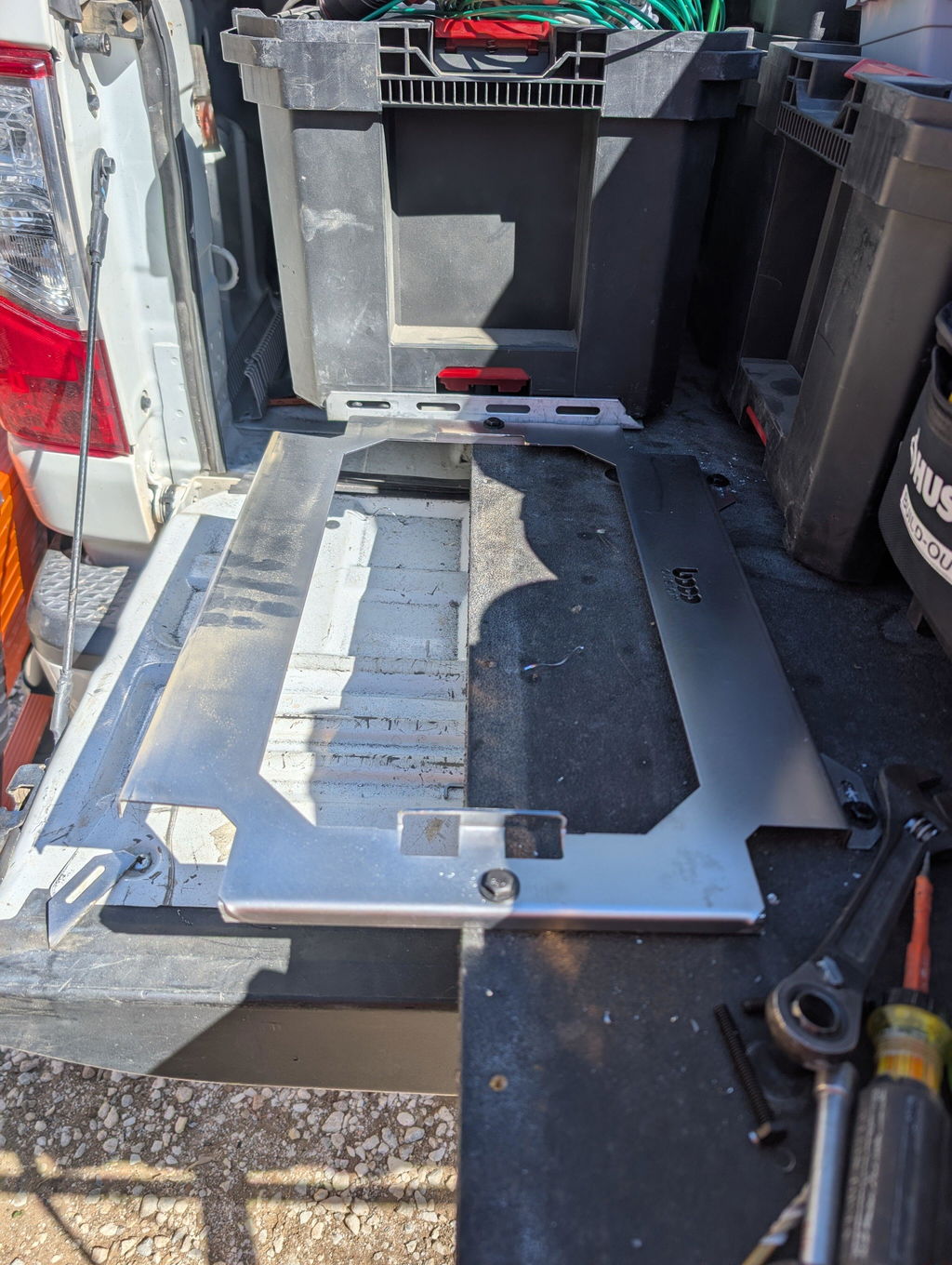
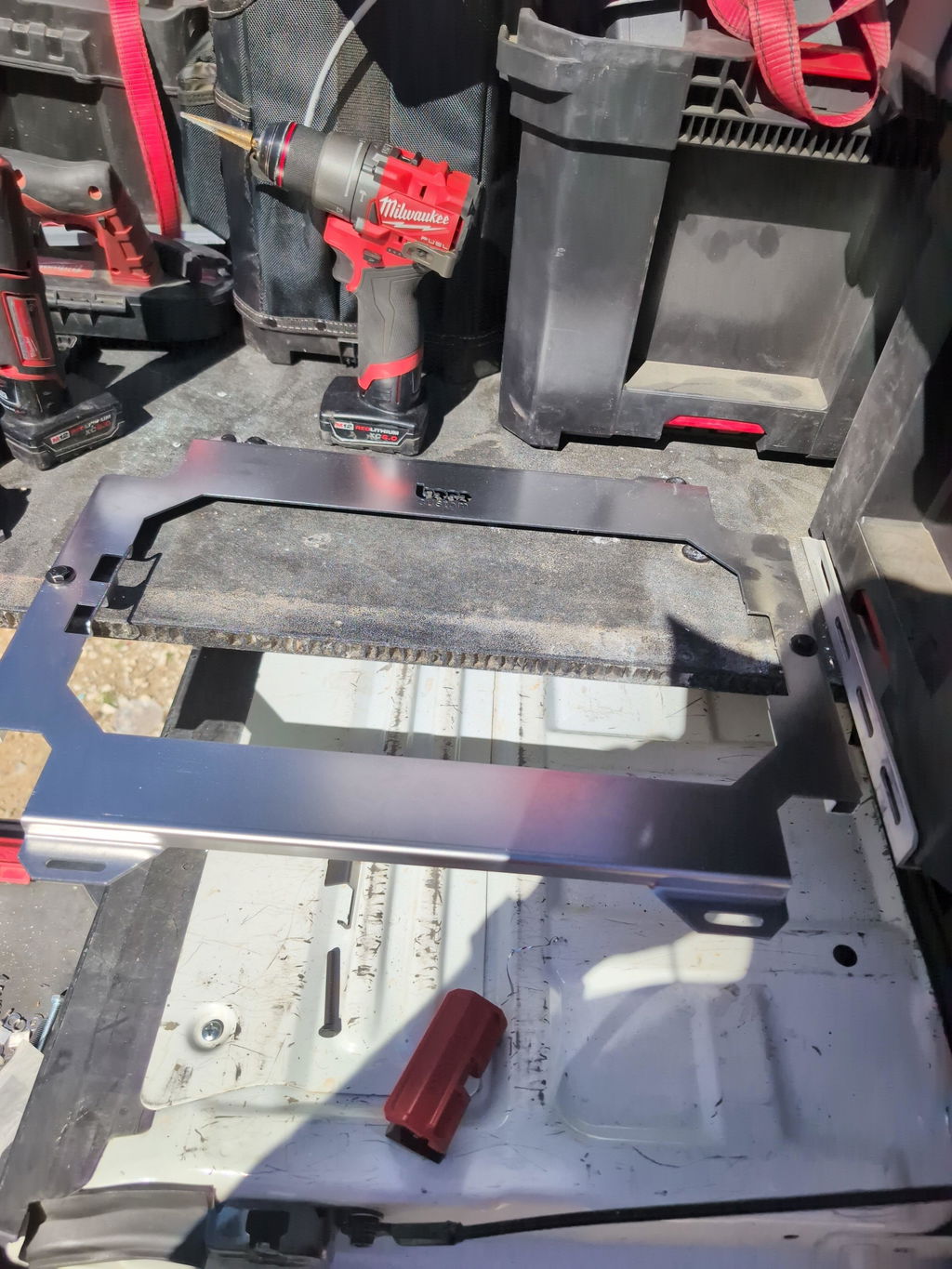
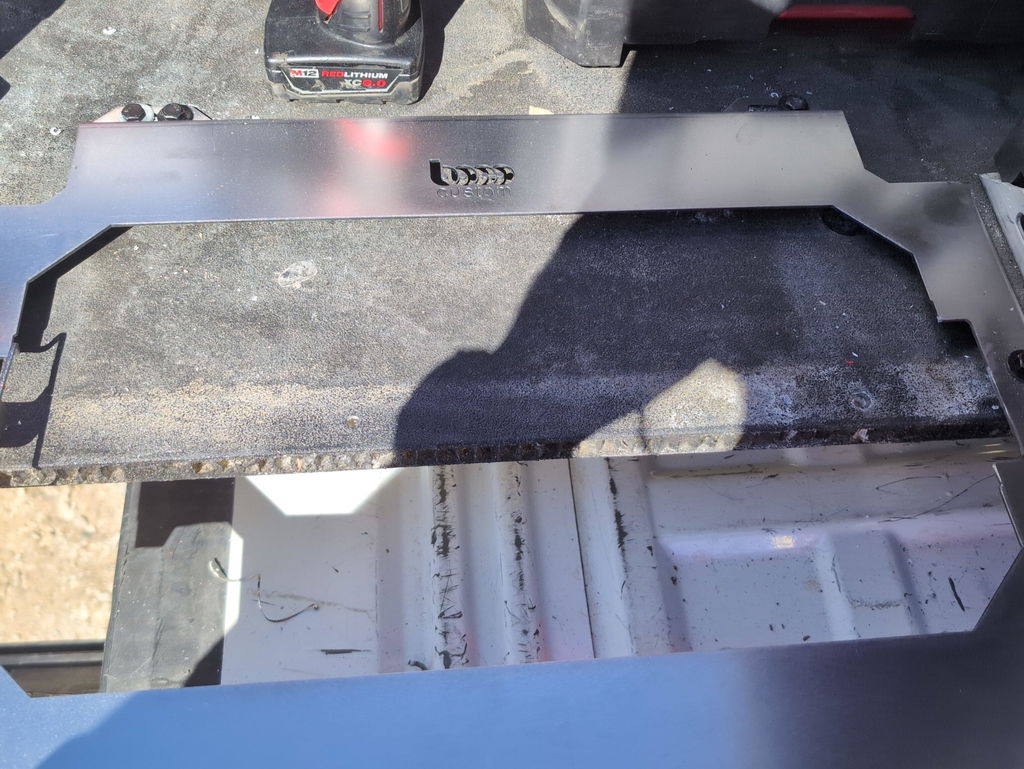
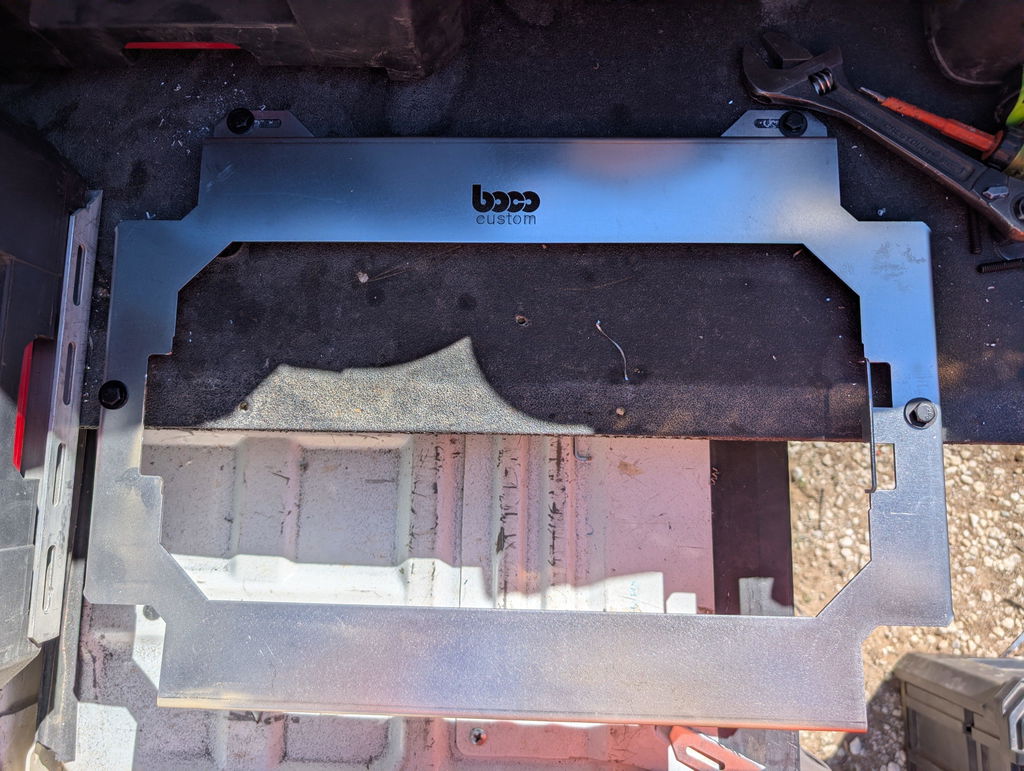
Mounting plates are the foundation. They secure cases to the vehicle, resist dynamic loads, and prevent lateral movement when the suspension unloads. Heavy-duty, laser-cut plates (like those from Boco Custom) are designed around known hole patterns and latch geometries, ensuring clean engagement and repeatable alignment. For example, if you run DeWalt’s ecosystem, dedicated solutions like a DeWalt Toughbox mounting plate help lock cases in place without excess height or added complexity.
Illustration 1
Pre-made systems often include:
Base plates in various footprints to match vehicle floors, drawers, or slide-out trays.
Modular bins and drawers with standardized latch and stack interfaces.
Tie-down points or integrated channels for straps and cargo rings.
Optional accessories such as divider kits, labels, and foam insets.
The benefit here is convergence: components are engineered to work together, and mounting solutions are dimensioned to that standard. For crews with mixed vehicles or rotating inventory, this modular consistency is an advantage—you can move cases between rigs, borrow components from a partner, or expand later without rethinking the foundation. While you give up some custom geometry, you gain speed and a high degree of out-of-the-box reliability.
Cost and Investment Comparison
Cost is more than sticker price. It includes the hours to plan, source, fabricate, and install, plus the opportunity cost of tying up a truck or a bay. A clear-eyed vehicle storage comparison weighs initial spend against lifetime performance, risk, and reusability.
Consider the major cost centers for each path:
Custom DXF vehicle storage
Digital assets: Purchasing DXF files is typically a small portion of the budget but accelerates the process by days or weeks.
Material: Steel and aluminum prices vary by market and thickness; sheet yields depend on nesting efficiency.
Cutting and fabrication: Laser time, deburring, forming, and any welding/standoffs add labor cost. Outsourced cutting is billed by time, inches, or complexity.
Finishing: Powder coating or anodizing protects against corrosion and abrasion, and it adds professional fit-and-finish.
Hardware and fasteners: Stainless or zinc hardware, nutserts, isolators, and threadlocker are essential for off-road duty.
Engineering risk: Iteration can mean recutting parts if fitment or clearances change; plan for at least one test fit.
Pre-made storage systems
Mounting plates: Upfront purchase of robust, low-profile plates designed for your ecosystem and vehicle footprint.
Modular cases and drawers: The ecosystem cost scales with quantity, drawer styles, and options like foam liners or locks.
Installation hardware: Brackets, bolts, anchors, and backing plates.
Opportunity cost: Typically lower because install is faster and more predictable.
In practice, advanced fabricators with in-house equipment often realize better value with custom DXF files because their incremental fabrication costs are low and the outcome is tightly tailored. If you’re outsourcing laser cutting and finishing, the pre-made route can be more economical—especially when you factor in the cost of redesigns or downtime. This calculus shifts again when you manage a fleet: the ability to redeploy pre-made modules between vehicles may reduce lifetime cost per truck.
A pragmatic approach is a hybrid: use a pre-made base plate for fast deployment and warranty-backed reliability, then supplement it with a few custom brackets or panels cut from DXF to integrate radios, compressors, or unique test gear. That way, you control costs while solving the last 10% that commercial products don’t address.
Customization and Design Flexibility
Customization is where DXF-driven fabrication shines. When you own the file, the vehicle becomes your template. You can profile around wheel wells and floor ribs, bias hole patterns to existing anchor points, and set clearances so drawers open without hitting bulkheads or door seals. For those who carry niche instruments, samples, or calibrated tools, that level of control safeguards sensitive assets and speeds up access on site.
Typical customizations include:
Geometry: Contoured edges, cutouts for seat brackets, and reliefs for tie-down loops or l-track.
Load path: Gussets, ribbing, and backers tuned to the expected cargo weight and dynamic loads.
Interfaces: Pre-drilled patterns for Packout, MODbox, Husky, or DeWalt ecosystems, plus universal slots for straps and hooks.
Serviceability: Access ports for wiring, pass-throughs for compressor lines, and captive nuts for future add-ons.
Ergonomics: Handholds, finger cutouts near latches, and staged heights for reach in vans or UTVs.
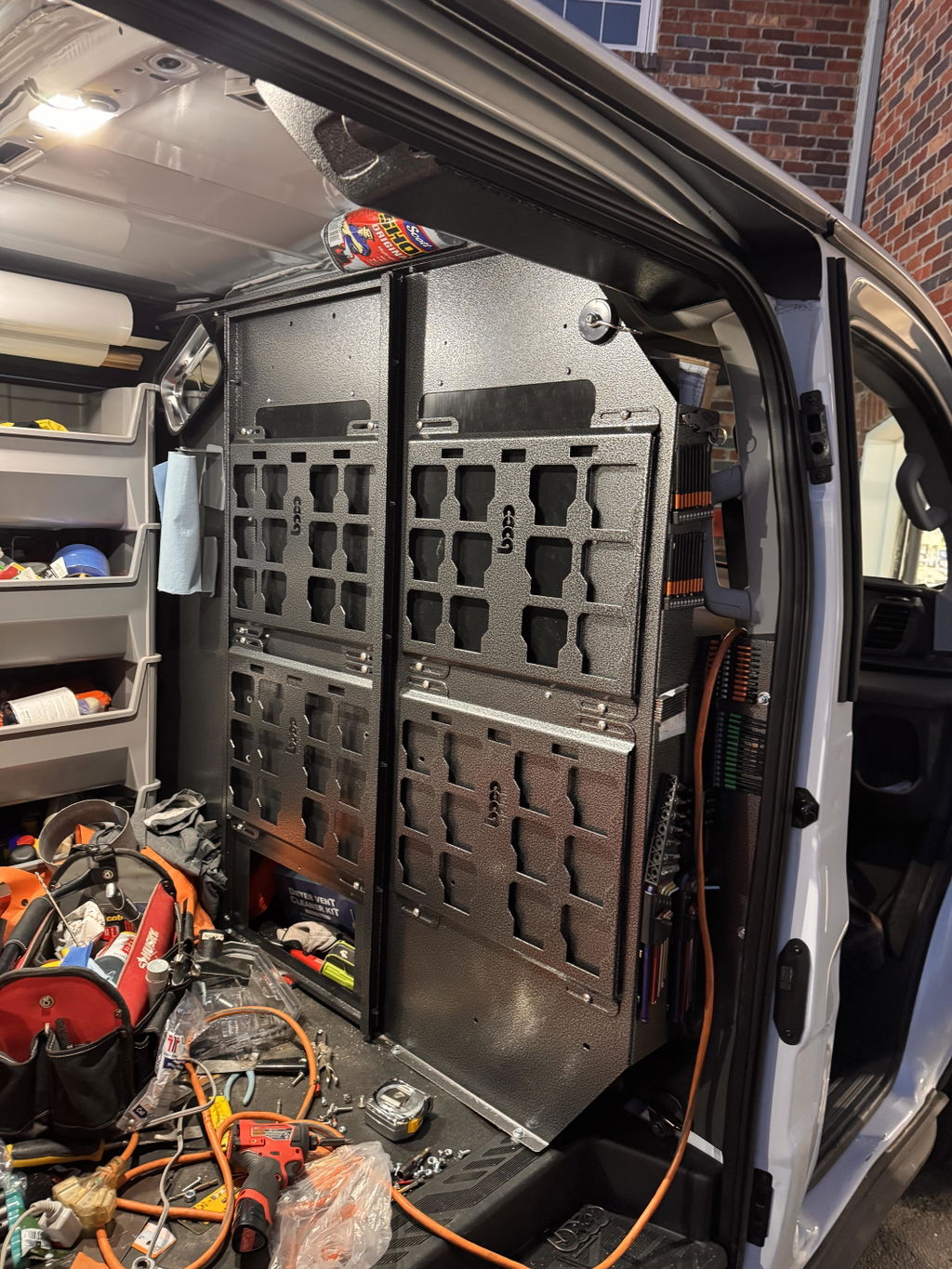
Pre-made systems are intentionally modular, which is a form of customization in itself, but they operate within defined geometries. You can choose from a set of case sizes and drawer formats, stack them in many permutations, and supplement with organizer bins. Yet if you need to wrap a platform around a cab step, tuck storage under a rear bench, or integrate a drop-slide fridge mount next to a tool stack, custom vehicle storage fabrication will get you there with fewer compromises.
Illustration 2
For many teams, the best flexibility play is using heavy-duty, low-profile plates as a standardized base (pre-made) and then personalizing the edges of the system (custom DXF) to handle radios, PPE holders, and recovery gear. The base plate preserves interchangeability; the custom attachments handle your unique workflow.
Durability and Material Quality Assessment
Off-road conditions punish weak points. Long washboard stretches generate relentless vibration, potholes impose shock loads, and temperature swings test finishes and plastics. Durability isn’t only about static strength; it’s about fatigue resistance, fastening integrity, and how materials behave over time in this environment.
Materials
Steel: High strength and stiffness, excellent fatigue resistance when designed correctly. Heavier, but forgiving to weld and economical to powder coat. Popular for mounting plates and structural brackets.
Aluminum: Lighter for the same thickness, good corrosion resistance, and effective where weight is critical. Requires appropriate thickness and joint design to avoid flex. Anodizing or powder coat improves longevity.
Plastics and composites: Often used in the cases of modular systems; good impact resistance with engineered ribbing. Must be paired with proper mounting to avoid latch wear and racking under dynamic loads.
Wood and laminates: Useful for interior panels or drawer faces; when sealed properly, they can be quiet and easy to modify. Less ideal for primary structural mounting in severe off-road use unless reinforced.
Design considerations
Thickness and ribbing: Plate thickness should match dynamic loads; strategic ribbing or bends can stiffen lighter materials.
Hardware: Use vibration-resistant fasteners, threadlocker where appropriate, and metal backing plates to distribute load through vehicle floors or walls.
Coatings: Powder coat offers robust abrasion resistance; zinc or stainless hardware combats corrosion; galvanic isolation is important when pairing dissimilar metals.
Latch and interface fit: Tolerances determine whether cases rattle or stay quiet. Laser-cut patterns that match the latch geometry reduce wear and noise.
Heavy-duty, low-profile mounting plates are foundational to durability because they resist prying forces and keep cases locked to a flat plane. Boco Custom’s approach—laser cutting USA-made materials with tight tolerances and offering both pre-made plates and design files—reflects a focus on robust interfaces that don’t creep under load. In custom DXF vehicle storage, you control those choices directly. In pre-made systems, you rely on the vendor’s engineering and validated fit.
Installation and Implementation Timeline
Installation time affects profitability. The quicker your vehicle returns to the field, the better. Timelines depend on parts availability, fabrication complexity, and how many unknowns you must resolve during the build.
Custom DXF path
Design review: Time to confirm measurements and make edits to the file so holes and edges clear obstacles. If you’re starting with a proven geometry, this can be hours rather than days.
Fabrication: Laser cutting is fast once queued; finishing and curing add calendar days. If you outsource, lead time depends on shop backlog.
Fitment iteration: A first-article fit often reveals minor adjustments. Plan for at least one test assembly before final coating when tolerances are tight.
Install: Final assembly usually goes quickly if the design work was solid—fasten to factory points, torque hardware, test latch engagement, and verify clearances.
Pre-made path
Sourcing: Mounting plates and modular cases are typically stocked and can be shipped or picked up locally. Boco Custom also offers local pickup for regional customers, which compresses lead time.
Prep: Identify anchor points, gather hardware, and stage components.
Install: Because geometries are standardized, mounting can be completed in a single session. You’ll verify latch engagement, load distribution, and any interference with seats or liners.
Commissioning: Label cases, assign inventory, and train the crew on the new layout.
If a deadline is tight—say a truck must be outfitted between Friday and Monday—the pre-made route offers predictable timing. If your team has fabrication bandwidth and you need a very specific footprint, the custom route can be competitive, especially when you can cut and coat in-house over a weekend. Hybrid builds often blend both: bolt down pre-made plates immediately, then add custom side panels or uprights as time allows.
Ease of Use and Maintenance
A storage system succeeds when it makes work easier, not when it forces your crew to think about it. Everyday usability shows up in how quickly cases latch, whether drawers clear adjacent equipment, and whether tools can be returned to the same place without a second thought.
Illustration 3
User experience factors
Access: Case handles should be reachable without awkward body angles; drawer pulls must clear doors and seatbacks.
Repeatability: Common hole patterns and keyed interfaces make it obvious where each case belongs, ideal for team environments.
Noise and rattle: Properly supported mounting plates and precise latch engagement keep noise down on rough roads.
Safety: Load paths and restraint points must prevent ejection during sudden stops or off-camber maneuvers.
Maintenance factors
Inspection intervals: Off-road vibration can loosen fasteners. Schedule torque checks on mounting hardware and inspect latch wear points quarterly or after severe trips.
Cleaning: Smooth finishes and open-slot designs allow debris to clear. Powder coat and anodize simplify wipe-downs and protect edges from corrosion.
Replacement and upgrade: With modular systems, you can swap a damaged case without disturbing the base. With custom DXF vehicle storage, you can re-cut an updated plate or bracket if your requirements change.
Pre-made systems are optimized for intuitive use, with latch geometries and stacking conventions baked in. Custom vehicle storage fabrication matches that ease-of-use when the design mimics proven patterns or integrates the same modular ecosystems. The difference is that custom designs can increase day-to-day efficiency with vehicle-specific touches—like moving a frequently used meter to a front-row slot or adding a finger recess so a gloved hand can unlatch a case in winter.
Best Use Cases and Recommendations
Each approach has a “sweet spot.” Matching your situation to the right method lowers total cost and improves field reliability.
Choose custom DXF files when:
You require a tight fit around irregular shapes (wheel wells, roll cages, compressors, inverters).
Weight targets are critical and you want to tune thickness, ribbing, or cutouts to shed pounds.
You manage a fabrication shop and can cut, bend, and finish in-house on short notice.
Specialized equipment needs dedicated mounts or cable routing not addressed by standard hardware.
Your team wants complete control over materials (steel vs. aluminum) and finishes.
Choose pre-made systems when:
You need immediate deployment with predictable installation time and minimal risk.
You want a deep catalog of compatible cases, drawers, and accessories out of the gate.
Multiple vehicles must share interchangeable modules to simplify logistics.
Warranty-backed components and standardized latching are priorities.
You prefer local pickup or fast shipping over in-house fabrication.
Choose a hybrid approach when:
A proven base plate delivers most of the value, but edge cases demand custom brackets or panels.
You want to future-proof the build: start with standardized modules, then add custom features as crew needs evolve.
You operate mixed fleets and need a common foundation with vehicle-specific adjustments.
Recommendations for professionals
Validate loads: Estimate static and dynamic loads, then choose plate thickness, hardware grade, and backing strategy accordingly.
Design for service: Ensure you can remove a plate or case without disturbing unrelated components. Captive nuts and access cutouts save hours.
Focus on anchor points: Verify floor and wall structures; add backing plates where sheet metal is thin. Avoid relying on trim fasteners for structural loads.
Standardize where it matters: Use consistent case sizes for common tools and standard labels. Leave custom work for specialized instruments or recovery gear.
Plan for growth: Reserve space for future radios, battery banks, or test kits. In DXF, add blank hole patterns that can be activated later.
Conclusion: Choosing the Right Storage Solution
There is no universal winner in the debate between custom DXF vehicle storage and pre-made off-road tool organization systems. The right choice reflects your schedule, fabrication capacity, and how tightly your requirements deviate from standard layouts. If uptime and predictability rule the day, pre-made mounting plates and modular cases deliver proven performance with minimal lead time. If your vehicle geometry, payload, or workflow sits outside the bell curve, editable DXF files and in-house cutting let you match the solution to the mission.
Boco Custom supports both strategies. Its heavy-duty, low-profile mounting plates anchor popular modular ecosystems with tight tolerances and USA-made quality, and local pickup is available for fast turnarounds. For fabricators, instant-download DXF files—such as the DXF bundle packout—offer a head start on custom vehicle storage fabrication. If you’re committed to a DeWalt setup, a purpose-built option like the DeWalt Toughbox mounting plate provides a clean, low-profile foundation.
Whichever path you choose, aim for a system that:
Survives real off-road loads without creeping or loosening.
Speeds up tool retrieval and return, even with gloves on.
Adapts as your team and equipment evolve.
Protects your investment through proper materials, coatings, and hardware.
Start with honest requirements, weigh your timeline and resources, and pick the approach that minimizes risk while maximizing daily efficiency. In the field, the best storage system is the one you don’t have to think about—because it just works.
Standard shipping takes 5 to 7 business days. Express (2 to 3 days) and overnight options are available at checkout. Orders over $50 ship free.
Can I order online and pick up in store?
Yes. Select "Pick up in store" at checkout and choose your nearest location. Most orders are ready within 2 hours.
What if my order arrives damaged?
Contact us within 7 days of delivery with your order number and a photo. We'll arrange a replacement or refund, no return shipping required.
AI-Generated Content Disclosure
This blog post was created with the assistance of RankGPT, an AI-powered tool designed to generate high-quality, SEO-optimized content at scale.
As a small business embracing modern technology, we use AI to help us:
Produce informative articles more efficiently
Increase our online visibility through better performance in traditional search engines (like Google) as well as emerging AI-powered searches and answer engines
Reach more potential customers and grow our presence in a competitive digital landscape
By leveraging tools like RankGPT, we're able to publish valuable content more consistently and scale our efforts in ways that would otherwise take significantly more time and resources.
Important notes for readers:
While RankGPT helps create well-structured and relevant content based on current best practices, AI-generated posts are not always 100% accurate, complete, or free from errors.
The information, opinions, and perspectives expressed may not fully reflect the exact views, experiences, or official positions of Boco Custom, its team members, or the individuals involved in our business.
AI content should be viewed as a starting point or general resource—not as personalized professional advice, definitive facts, or a substitute for direct consultation with us or qualified experts.
We always recommend verifying important details independently, especially for decisions related to custom products, services, or any business matters.
We are committed to transparency and continually work to improve our content. If you have questions, feedback, or spot any inaccuracies, please reach out—we genuinely appreciate it!
Not only is this way overbuilt for the price with its solid, confident craftsmanship, I am completely convinced that these guys are the best around when it comes to the packout platform.
I like these, they are much more compact than what Milwaukee offers. I had them powder coated in silver vain and they look awesome. I love the bonus half rack they sent me. That’s the mark of a nice company.


Dejar un comentario