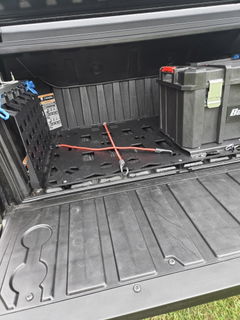
Milwaukee Packout Single + Quad Mounting Plate DXF – Reversible, Logo Space, Bend Table Included
Grab this precision DXF file for your Milwaukee Packout Single + Quad mounting plate. Designed and verified in California, USA by BOCO Custom—clean cuts, no guesswork.
Cut, bend per included table, and wall mount for a reversible plate that holds one single/half-width box + four accessory boxes. Room to add your own logo or graphic before cutting.
- Plasma, Laser & Waterjet Ready — compatible with Aspire, Fusion 360, LightBurn, EnRoute, SheetCAM, most CNC software
- Precision-Cut & Verified — tested on ShopSabre Plasma Table and Xtool P2 Laser for smooth edges and reliable fits
- Bend Table Included — full drawings with bend lines and angles provided
- Instant Download — files delivered immediately, start fabricating today
Features & specifications
- File Format: High-quality DXF (clean vectors)
- Compatibility: Plasma, Laser, Waterjet CNC machines
- Software Tested: Aspire, Fusion 360, LightBurn, EnRoute, SheetCAM
- Process: Cut, bend, wall mount
- Extras: Bend table with drawings included
- Made: USA — BOCO Custom (California, USA)
- License: Create/sell physical products; no resale/sharing of files
Usage notes
- Download ZIP instantly after purchase.
- Import DXF into your CNC software.
- Cut material of choice.
- Bend per included bend table.
- Mount to wall.
- For issues, message us—we help you succeed.
Perfect for
Mechanics, fabricators, contractors, garages, workshops, vans, and anyone needing organized Packout accessory storage.
Important info
Digital download only—no physical item shipped. All sales final/non-refundable.
Download now and build pro-level Packout mounts. Thanks for supporting a small USA maker!
High-Quality DXF Files for Accurate CNC Cutting
The DXF file for Packout mounts is designed to provide precise and reliable data for CNC cutting machines. These files ensure that Milwaukee Packout Single and Quad mounts can be recreated or customized with exact measurements. Using DXF files reduces errors and streamlines the manufacturing process, saving time and materials. Whether you are fabricating mounts for professional tool storage or DIY projects, these files guarantee compatibility and ease of use on various CNC platforms, making your Milwaukee Packout mounts both functional and durable.
Versatility and Customization with Packout Mount DXF Files
One of the main advantages of the DXF file for Packout mounts is its versatility. You can use it to cut different materials including metal, plastic, and wood, depending on your project requirements. The ability to customize the Milwaukee Packout Single and Quad mounts by modifying the DXF files allows users to create unique storage solutions tailored to specific needs. This flexibility is ideal for professionals, hobbyists, and anyone looking to enhance their tool organization using CNC precision technology.
Easy Integration and Compatibility with CNC Software
The DXF file for Packout mounts is fully compatible with most CNC software and equipment, including popular platforms like AutoCAD, Fusion 360, and others. This compatibility ensures a smooth workflow from design to production. You can quickly import these files, make minor adjustments if needed, and execute the cutting process efficiently. The straightforward nature of these DXF files means less learning curve and faster turnaround, making them an essential resource for optimizing the Milwaukee Packout Single and Quad mount manufacturing or modification process.
10-Gauge Steel (0.1345" | Thickness of Two Stacked Dimes)
- Best For: Heavy-duty commercial wall mounts, shop workbenches, and massive modular tool stacks.
- The Advantage: Extreme structural stiffness. This ultra-thick steel completely eliminates flexing, twisting, and tool rattling, making it the definitive choice for demanding daily job-site use.
12-Gauge Steel (0.1046" | Thickness of a Standard House Key)
- Best For: Mobile service vans, enclosed trailers, and standard shop organization layouts.
- The Advantage: The ultimate sweet spot between bulletproof strength and smart weight distribution. It handles constant over-the-road vibrations flawlessly without adding unnecessary bulk to your mobile rig.
14-Gauge Steel (0.0747" | Thickness of a Nickel)
- Best For: Handheld battery organizers, small tool holsters, and lightweight shelf accessories.
- The Advantage: High-tensile rigidity in a streamlined profile. It provides a rock-solid, permanent mount for smaller gear while keeping your workspace layout clean and low-profile.
8-Gauge Aluminum (0.1285" | Heavy-Duty Marine Grade)
- Best For: Open truck beds, roof racks, exterior trailer sides, and high-moisture environments.
- The Advantage: Maximum corrosion resistance with severe weight savings. Shaved pounds keep your mobile fuel efficiency optimized while remaining completely immune to rain, snow, and road salt oxidation.
10-Gauge Stainless Steel (0.1345" | Thickness of Two Stacked Dimes)
- Best For: Premium exposed truck bed brackets, marine applications, high-end shop builds, and ultimate weather protection.
- The Advantage: Combines the absolute, unyielding structural rigidity of our thickest 10-gauge plate with total lifetime corrosion resistance. It requires no paint or powder coat to stay 100% immune to rust, road salt, and harsh outdoor elements.
Note: Sheet metal gauge numbers run inversely—the lower the gauge number, the thicker and more rigid the actual metal substrate is.
What is Proposition 65?
Proposition 65 (officially known as the Safe Drinking Water and Toxic Enforcement Act of 1986) is a California law that requires businesses to provide a warning to California consumers if their products contain chemicals known to the State of California to cause cancer, birth defects, or other reproductive harm.
These warnings are required even if the chemical is present in incredibly low amounts that may not pose any significant risk to your health.
California Proposition 65 Warning
⚠️ WARNING: Products sold on this website can expose you to chemicals including lead, nickel, chromium, or other phthalates, which are known to the State of California to cause cancer and birth defects or other reproductive harm. For more information, go to www.P65Warnings.ca.gov.
Why is this warning on my order?
Because BOCO Custom LLC ships products nationwide, we include this warning to ensure full compliance with California law. A Proposition 65 warning does not mean a product is unsafe or defective; it simply means the product contains a trace amount of a regulated substance. We prioritize the safety of our customers and provide this information so you can make informed purchasing decisions.